
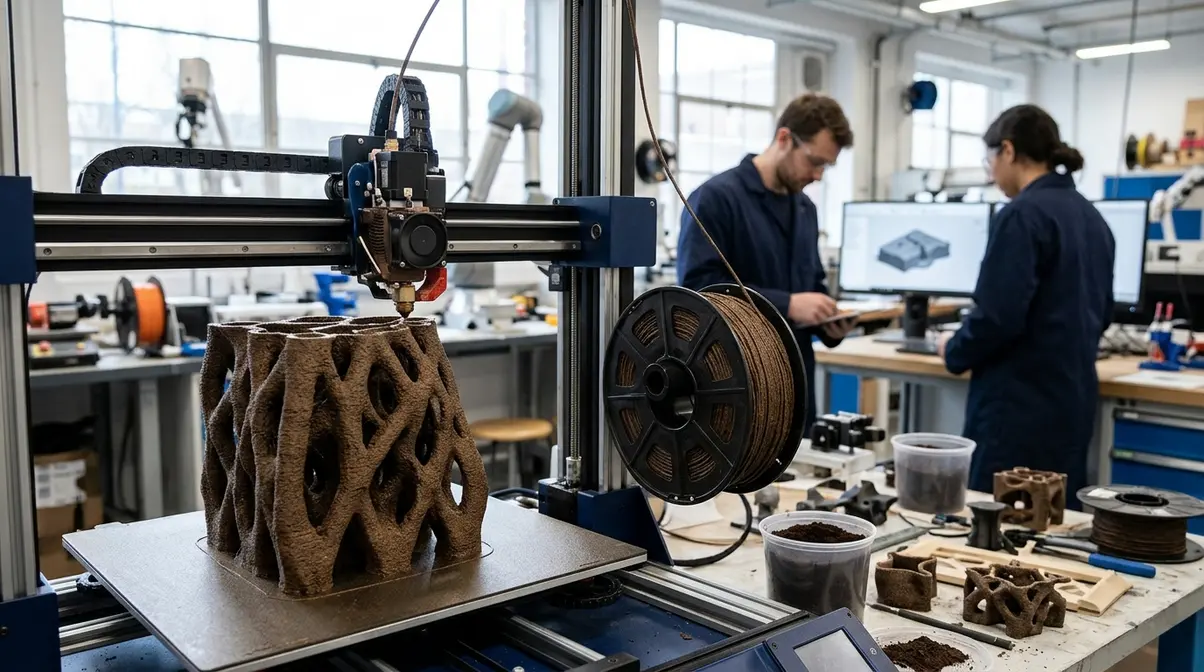
Researchers at RMIT University have successfully developed a new biodegradable 3D printing filament incorporating spent coffee grounds. This initiative, titled “Waste to Form,” focuses on sustainable material innovation within the field of additive manufacturing.
The project is led by Distinguished Professor Baohua Jia from the university’s School of Science and Dr. Nic Bao from the School of Architecture and Urban Design. By repurposing organic waste into functional printing material, the research team aims to provide a more sustainable alternative to traditional plastics used in large-scale construction and design.
Beyond the development of the filament itself, the research team has demonstrated its practical application by utilizing the material to produce full-scale architectural forms. This project highlights a shift toward integrating waste-derived materials into professional design workflows, potentially reducing the environmental footprint of architectural fabrication through the use of regenerative resources.
Leave a Reply