Author: DEROBS

  • NVIDIA introduces Global Performance Tuner for enhanced TensorRT optimization

    NVIDIA introduces Global Performance Tuner for enhanced TensorRT optimization

    NVIDIA has officially introduced the Global Performance Tuner, a new feature integrated into the latest release of NVIDIA TensorRT 11.1. This tool is designed to address the complexities of optimizing deep learning models by providing automated, accuracy-aware performance tuning.

    By leveraging the Global Performance Tuner, developers can perform end-to-end performance optimization within the TensorRT environment. The system functions by dynamically customizing various optimizations tailored to specific models, a process intended to streamline the deployment of high-performance AI applications.

    This development follows the challenges associated with scheduling, which remains a critical stage in deep learning workflows. By automating the tuning process, the feature aims to simplify the optimization path for developers working with diverse AI models, moving beyond traditional, single-build route limitations. Further technical context on the challenges addressed by this tool can be found in the first part of NVIDIA’s technical series on the subject.

    Source: NVIDIA
    Original article: https://developer.nvidia.com/blog/scaling-nvidia-tensorrt-performance-optimization-beyond-a-single-build-route-with-the-global-performance-tuner-part-2/

  • Amazon expands SageMaker AI with multi-turn reinforcement learning for agentic tasks

    Amazon expands SageMaker AI with multi-turn reinforcement learning for agentic tasks

    Amazon has introduced Multi-Turn Reinforcement Learning (MTRL) on Amazon SageMaker AI, providing a structured pipeline for training models that handle multi-step agentic tasks. While standard fine-tuning is typically suited for single-prompt responses, MTRL is designed to optimize sequences of actions where the outcome depends on cumulative decisions.

    Training for Multi-Step Agentic Tasks

    In many real-world applications, such as internal business workflows, there is no pre-existing “correct” sequence for an AI to imitate. Instead, the model must be trained to navigate a series of steps to achieve a specific result. MTRL addresses this by allowing developers to define a reward function that evaluates the outcome of an entire sequence. The system uses Amazon Bedrock AgentCore to host the environment where the agent performs tasks, calls the policy model, and eventually returns a reward upon completion.

    To demonstrate the capability, Amazon used the game Wordle as a testing ground. Because the game requires multi-turn strategy based on evolving feedback, it serves as an effective proxy for more complex business processes. In this proof-of-concept, the training pipeline improved the solve rate of an open-weights 20B model from 61 percent to 84 percent.

    System Infrastructure and Deployment

    The MTRL pipeline on SageMaker AI is serverless, meaning users do not need to manually configure clusters or manage infrastructure sizing. The system provisions the necessary resources for training and sampling. Key components include:

    • Policy Model: The base model currently supports options such as Amazon Nova 2 Lite, GPT-OSS-20B, Gemma 4 31B, and Qwen 3.6 27B.
    • Training Mechanism: It utilizes Group Relative Policy Optimization (GRPO) to update Low-Rank Adaptation (LoRA) adapters based on reward variance across multiple rollouts.
    • Monitoring: Integration with MLflow allows for real-time tracking of rewards and token usage throughout the training process.

    Strategic Considerations

    For organizations, MTRL offers a method to specialize small, cost-effective models for unique workflows that are not captured in general-purpose model training. Amazon emphasizes that datasets, agents, and trained models remain within the user’s AWS account and are not utilized to train base models. While the process provides flexibility, the company notes that reward design is critical, recommending an outcome-dominant reward structure with minimal shaping terms to ensure consistent performance.

    As of the announcement, the capability is available in specific AWS regions, including US East (N. Virginia) and US West (Oregon), with pricing based on token consumption across prefill, sample, and training dimensions.

    Source: aws.amazon.com
    Original article: https://aws.amazon.com/blogs/machine-learning/multi-turn-reinforcement-learning-on-amazon-sagemaker-ai-a-hands-on-guide/

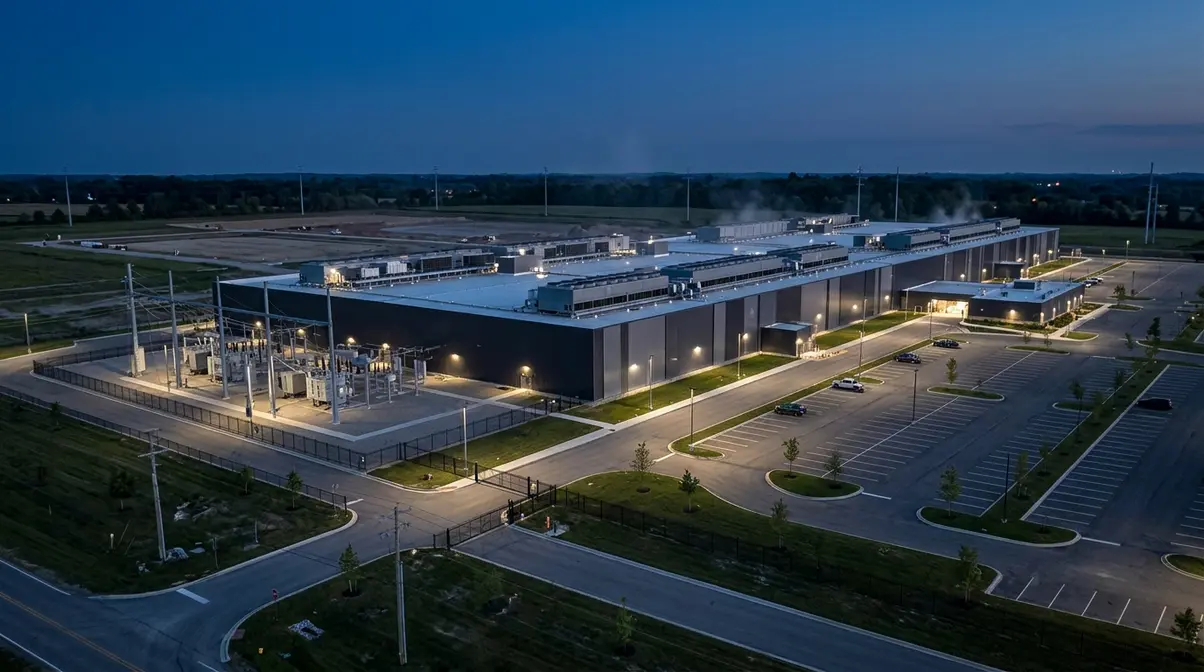
  • Meta brings first phase of Ohio Prometheus data center campus online

    Meta brings first phase of Ohio Prometheus data center campus online

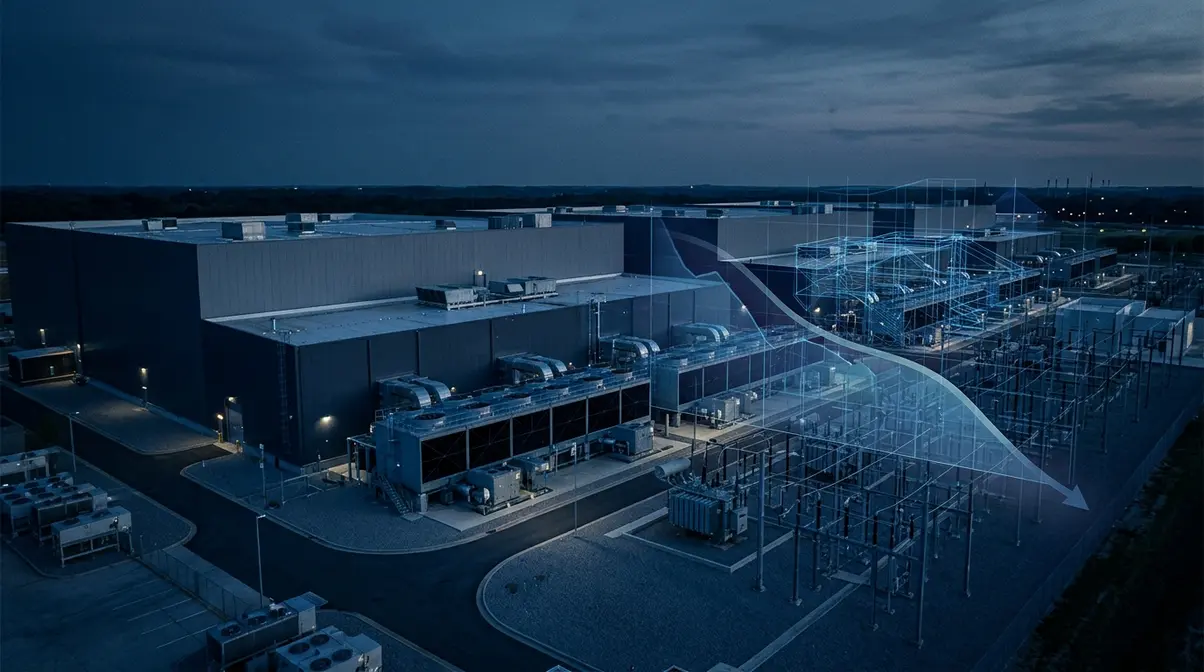
    Meta has announced the commencement of operations at its new data center campus in Ohio, known as Prometheus. The facility has officially brought its first phase online to support the company’s expanding infrastructure requirements.

    According to the company, the newly operational data center is already being utilized to support the training of Muse, one of Meta’s artificial intelligence models. This development highlights Meta’s ongoing investment in the physical infrastructure necessary to scale its generative AI and machine learning capabilities.

    Further details regarding the full scope of the Prometheus campus or specific technical specifications of the facility were not disclosed in the initial announcement.

    Source: Data Center Dynamics
    Original article: https://www.datacenterdynamics.com/en/news/meta-details-ohio-prometheus-data-center-campus-with-first-phase-live/

  • Short seller raises concerns over Csquare financial and portfolio structure

    Short seller raises concerns over Csquare financial and portfolio structure

    A short seller has publicly targeted Csquare, raising significant concerns regarding the data center operator’s business model. According to reports, the investor has characterized the company’s shares as worthless, citing issues related to its portfolio and capital structure.

    As of this reporting, the allegations remain claims made by the short-selling party. The development highlights a critical look at the underlying financial stability of firms operating within the data center sector, which remains under pressure to balance rapid infrastructure expansion with complex debt and asset management.

    DEROBS continues to monitor the situation for any official response from Csquare or further documentation regarding these financial allegations.

    Source: Data Center Dynamics
    Original article: https://www.datacenterdynamics.com/en/news/short-seller-bets-against-csquare-says-data-center-firms-shares-are-worthless/

  • Quantitative finance salaries continue to rise amid AI integration

    Quantitative finance salaries continue to rise amid AI integration

    Despite the rapid integration of artificial intelligence across the financial services sector, compensation for quantitative finance professionals continues to trend upward. According to recent research, the demand for specialized quantitative expertise remains high, sustaining salary growth for experts in the field.

    While AI technologies are increasingly utilized to automate and augment various financial processes, the data suggests that these advancements have not depressed remuneration for human specialists. Instead, the specialized skills required to navigate and implement these quantitative models remain a premium asset within the industry.

    Source: Finextra
    Original article: https://www.finextra.com/newsarticle/48640/quant-salaries-on-the-rise-amid-ai-revolution?utm_medium=rssfinextra&utm_source=finextrafeed

  • Emerald AI and Nvidia complete seventh pilot project in Iceland

    Emerald AI and Nvidia complete seventh pilot project in Iceland

    Emerald AI and Nvidia have successfully completed their seventh joint pilot project, according to a recent update. The initiative was hosted at the Nscale data center facility located in Iceland.

    This collaboration marks the latest in a series of pilot programs undertaken by Emerald AI. While specific technical outcomes of this seventh pilot were not detailed in the available announcement, the partnership continues to focus on testing and development within the data center environment.

    Source: Data Center Dynamics
    Original article: https://www.datacenterdynamics.com/en/news/emerald-ai-nvidia-share-results-of-latest-pilot-at-nscale-data-center-in-iceland/

  • Addressing the reputation gap in the fintech sector

    Addressing the reputation gap in the fintech sector

    In the rapidly evolving digital finance landscape, a concept described as the ‘reputation gap’ has emerged as a significant consideration for industry stakeholders. This phenomenon refers to the disparity between the public image held by a fintech firm and the actual nature or operational reality of the business.

    As digital platforms continue to reshape traditional financial services, market participants and consumers are increasingly encouraged to scrutinize the alignment between marketing narratives and firm behavior. The existence of this gap suggests that external stakeholders may frequently hold inaccurate assumptions regarding the capabilities, ethics, or underlying business models of fintech organizations.

    While the provided source identifies this tension, further industry analysis is required to map the specific drivers of this perception shift and its long-term implications for regulatory trust and consumer adoption.

    Source: Finextra
    Original article: https://www.finextra.com/blogposting/33276/reputation-reframed-the-reputation-gap—your-fintech-is-probably-not-who-you-think-it-is?utm_medium=rssfinextra&utm_source=finextrafeed

  • HPE releases security updates for 72 ArubaOS vulnerabilities

    HPE releases security updates for 72 ArubaOS vulnerabilities

    Hewlett Packard Enterprise (HPE) has announced the release of security updates to address 72 vulnerabilities identified within the Aruba Operating System (ArubaOS). The update bundle includes fixes for eight maximum-severity security flaws, specifically targeting critical authentication bypass and remote code execution vulnerabilities.

    These vulnerabilities represent significant risks to the security of network infrastructure utilizing ArubaOS. By addressing these flaws, HPE aims to mitigate the potential for unauthorized access or the execution of malicious code, which could compromise the integrity and confidentiality of enterprise networking environments.

    Organizations utilizing ArubaOS are encouraged to review the latest security advisories from HPE and apply the necessary patches to protect their digital infrastructure from potential exploitation. As with all critical security updates, timely deployment is essential for maintaining digital resilience across corporate networks.

    Source: BleepingComputer
    Original article: https://www.bleepingcomputer.com/news/security/hpe-patches-eight-max-severity-rce-and-auth-bypass-aos-flaws/

  • Neocloud Nebius secures $3.5bn in financing from Citi

    Neocloud Nebius secures $3.5bn in financing from Citi

    Neocloud Nebius has announced that it has secured a $3.5 billion senior secured financing facility from Citi. The funding is intended to support the company’s ongoing growth initiatives, with a strategic focus on expanding its operations throughout 2027 and the years following.

    As a provider of cloud and digital infrastructure, this capital infusion represents a significant step in the company’s efforts to scale its capacity. The facility serves as a key financial instrument for Neocloud Nebius as it navigates the competitive landscape of the digital economy.

    Source: Data Center Dynamics
    Original article: https://www.datacenterdynamics.com/en/news/neocloud-nebius-secures-35bn-in-financing-from-citi/

  • STTGDC to host Neysa GPUs at Noida data center facility

    STTGDC to host Neysa GPUs at Noida data center facility

    STT GDC India (STTGDC) has announced that its Noida 2 data center facility will serve as the host for up to 9,000 GPUs intended for Neysa, an emerging provider of ‘neocloud’ infrastructure services.

    The integration of these graphics processing units is designed to support the scaling requirements of Neysa’s specialized cloud platform. By providing this infrastructure in Noida, STTGDC aims to facilitate the high-compute demands associated with the deployment of the neocloud services.

    As the digital economy in India continues to expand, the availability of specialized data center capacity for AI and high-performance computing workloads remains a critical development for infrastructure providers.

    Source: Data Center Dynamics
    Original article: https://www.datacenterdynamics.com/en/news/sttgdc-to-host-neysa-gpus-at-data-center-in-noida-india/