Category: Digital Infrastructure

  • GF expands LiquidCore portfolio with new multi control valve

    GF expands LiquidCore portfolio with new multi control valve

    GF has announced the expansion of its LiquidCore portfolio with the introduction of an intelligent Multi Control Valve. The company stated that this new component serves as an active intelligence layer for its cooling systems.

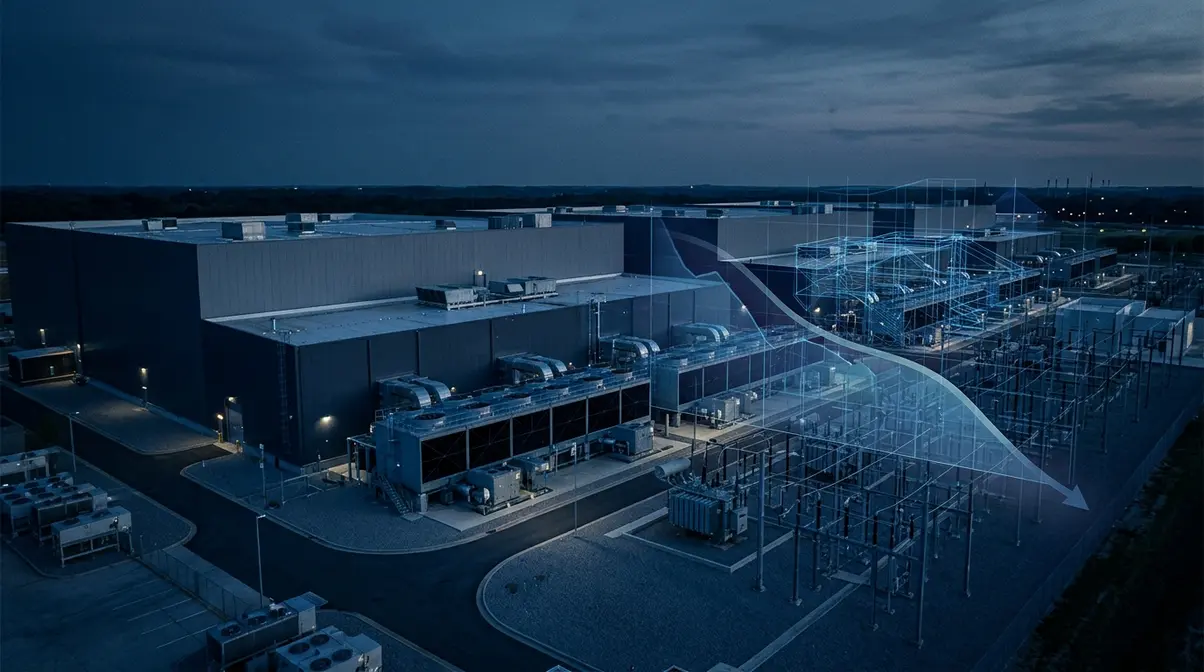
    By integrating the Multi Control Valve, GF completes its single-source LiquidCore system offering. The technology is designed to manage and maximize the efficiency of direct liquid cooling, a growing requirement for high-density computing environments within modern data centers.

    Source: Data Center Dynamics
    Original article: https://www.datacenterdynamics.com/en/product-news/gf-completes-liquidcore-portfolio-with-intelligent-multi-control-valve-to-maximize-direct-liquid-cooling-efficiency/

  • Actyus, Adequita, and Nethits establish investment fund for edge data center infrastructure

    Actyus, Adequita, and Nethits establish investment fund for edge data center infrastructure

    Actyus, Adequita, and Nethits have announced the launch of a joint investment fund dedicated to the development of edge data centers. The initiative focuses on deploying smaller-scale infrastructure designed to bring computing capabilities closer to businesses and government agencies.

    By prioritizing edge deployment, the project aims to reduce latency and enhance operational efficiency for end-users. The collaboration brings together the resources of the three organizations to support the growing demand for decentralized computing solutions.

    Source: Data Center Dynamics
    Original article: https://www.datacenterdynamics.com/en/news/actyus-adequita-and-nethits-launch-fund-for-edge-data-centers-report/

  • Crown Castle eyes infrastructure support for SpaceX’s terrestrial connectivity

    Crown Castle eyes infrastructure support for SpaceX’s terrestrial connectivity

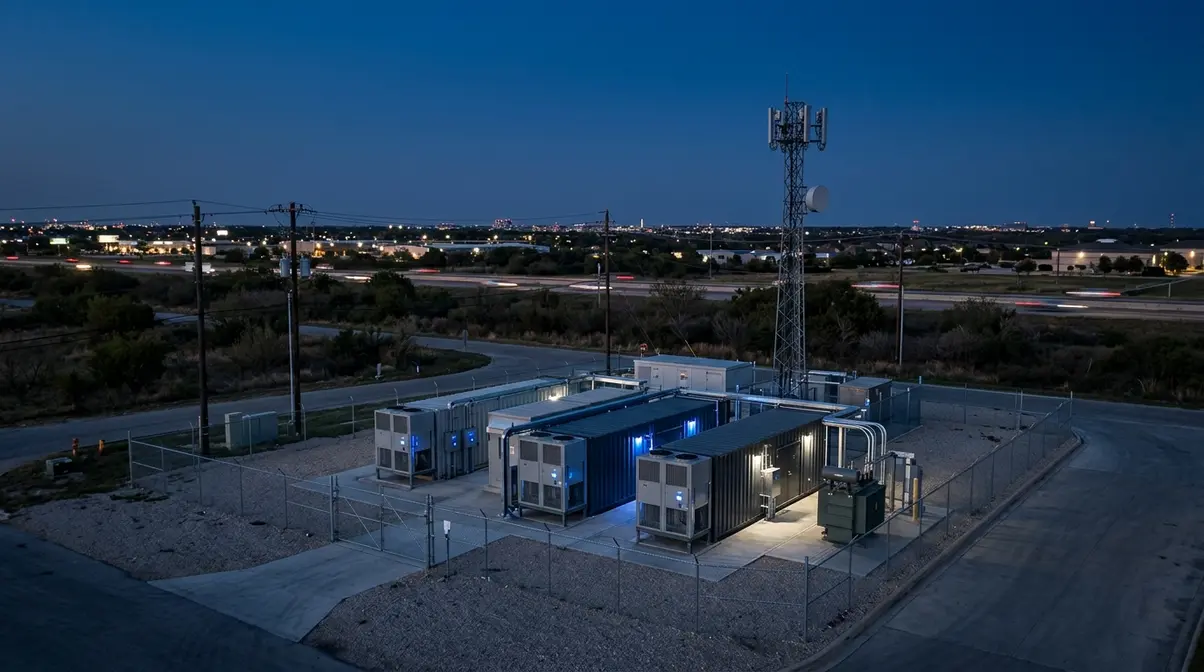
    Crown Castle, a prominent operator of communications towers, has indicated a strategic interest in supporting SpaceX’s terrestrial network expansion. The company’s leadership maintains a bullish outlook on the potential to leverage its existing infrastructure assets to assist in the rollout of SpaceX’s terrestrial spectrum.

    As SpaceX continues to evolve its connectivity capabilities beyond satellite services, the integration of terrestrial infrastructure has emerged as a potential focus area. Crown Castle’s signals suggest a willingness to engage with carrier spectrum deployment projects, positioning its tower portfolio as a foundational component for expanding terrestrial network reach.

    Source: Data Center Dynamics
    Original article: https://www.datacenterdynamics.com/en/news/crown-castle-bullish-on-carrier-spectrum-deployment-says-it-can-support-spacexs-terrestrial-dreams/

  • New Libyan telecommunications firm schedules 2027 data center launch

    New Libyan telecommunications firm schedules 2027 data center launch

    A new telecommunications firm operating in Libya is preparing to expand the nation’s digital infrastructure with the launch of a data center, currently scheduled for 2027.

    This development occurs in parallel with ongoing work on the Medusa subsea cable system, which is currently progressing in the city of Benghazi. The integration of high-capacity subsea connectivity and local data center facilities marks a significant step in the evolution of Libya’s digital infrastructure landscape.

    Source: Data Center Dynamics
    Original article: https://www.datacenterdynamics.com/en/news/new-libyan-telecom-firm-to-launch-data-center-in-2027/

  • Core Stack joint venture expands Italian data center network

    Core Stack joint venture expands Italian data center network

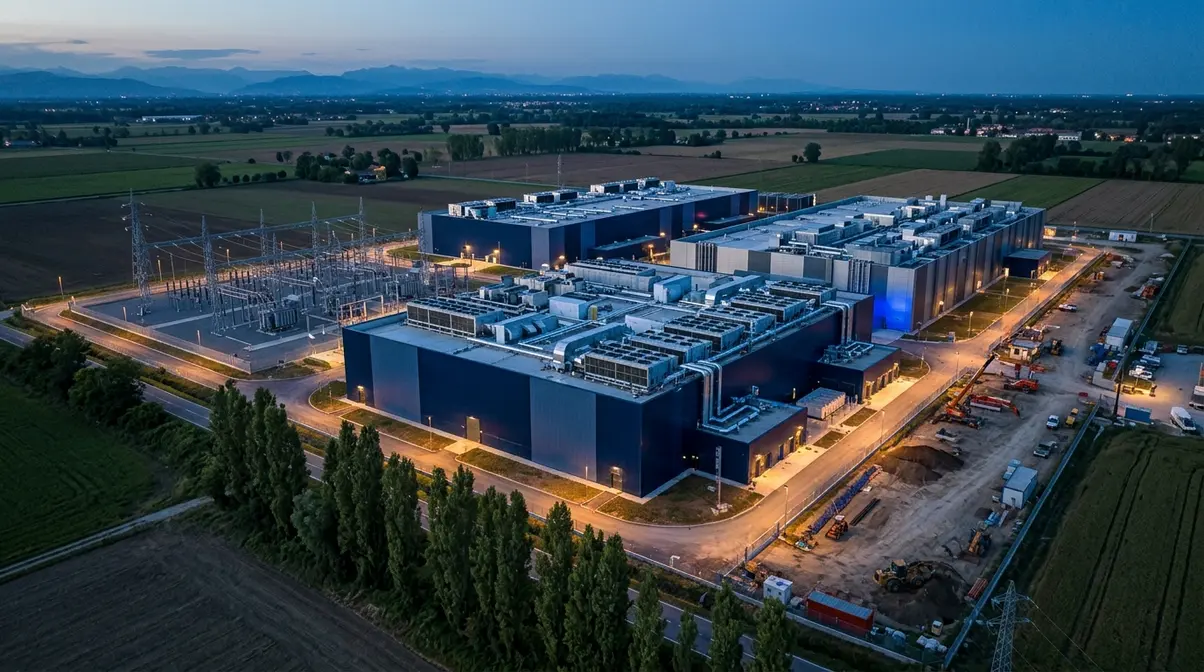
    The Core Stack joint venture is expanding its footprint within Italy as part of a previously announced €1 billion investment in the country’s digital infrastructure. New facilities are currently in the advanced planning stages near Cremona and Verona.

    These planned data centers form part of the venture’s broader strategy to enhance network capacity across the region. As the project progresses from planning to development, it highlights the ongoing expansion of digital infrastructure necessary to support growing data demands in Italy.

    Source: Data Center Dynamics
    Original article: https://www.datacenterdynamics.com/en/news/core-stack-jv-adds-more-data-centers-to-1bn-italy-network/

  • Amazon QuickSight expands geospatial capabilities with new point and route visualization

    Amazon QuickSight expands geospatial capabilities with new point and route visualization

    Amazon has announced a functional update to its business intelligence service, Amazon QuickSight, enhancing its layer map visuals with support for Point and LineString geometry types. This development extends the platform’s existing GeoJSON workflow, which was previously limited to polygon shapes such as sales territories or regional boundaries.

    New capabilities for spatial data

    By incorporating Point and LineString geometries, users can now represent granular spatial data directly on interactive dashboards. Point features allow for the mapping of individual locations, such as retail stores or facility sites. LineString features enable the visualization of movement or connections between locations, such as flight paths, shipping lanes, or delivery routes.

    Unlike QuickSight’s native point maps, which geocode location names automatically, layer map visuals require users to provide explicit coordinates within a GeoJSON file. This configuration offers distinct advantages for specific use cases, including the ability to lock the map’s viewport to a fixed geographic region, thereby preventing users from inadvertently panning or zooming away from the intended area.

    Technical implementation

    The implementation requires a GeoJSON file—with a maximum file size of 100 MB—and a corresponding QuickSight dataset. Data linking is achieved through a shared join key found in both the GeoJSON properties and the dataset rows. Once linked, users can customize map layers by adjusting color, line width, and opacity to improve data clarity.

    For complex visualizations, such as displaying customer distribution within specific territories or highlighting stops along a logistics route, QuickSight supports layering multiple visuals. By utilizing free-form layout settings, administrators can stack multiple layer map visuals to create a composite view. Each sheet supports up to five stacked layer map visuals.

    Operational considerations

    While standard QuickSight visuals update dynamically through SPICE or Direct Query, GeoJSON-based layer map geometry is static. Updates to locations or routes require either a manual re-upload of the GeoJSON file via the console or a programmatic approach using Amazon S3 and the QuickSight API. For automated workflows, developers can reference updated GeoJSON files stored in S3 and utilize the UpdateDashboard and UpdateDashboardPublishedVersion APIs to deploy changes to end users.

    This update provides data analysts with more precise control over map-based insights, catering to scenarios where static geographic context is essential for operational reporting.

    Source: aws.amazon.com
    Original article: https://aws.amazon.com/blogs/machine-learning/visualize-points-and-routes-with-geojson-in-amazon-quick-sight-layer-maps/


  • Automating Amazon SageMaker AI endpoint updates with AWS CDK

    Automating Amazon SageMaker AI endpoint updates with AWS CDK

    Updating Amazon SageMaker AI real-time endpoints—such as modifying instance types or environment variables—can often result in deployment failures when using AWS CloudFormation or the AWS Cloud Development Kit (CDK). This challenge arises because SageMaker requires the deregistration of scalable targets before an endpoint configuration can be updated. When these processes are managed natively, CloudFormation often loses the ability to track Application Auto Scaling resources, leading to stuck states or endpoints running without auto-scaling capabilities.

    Solving Orchestration Challenges

    To address these limitations, a reusable CDK construct has been developed that utilizes custom resources to orchestrate the auto-scaling lifecycle during endpoint updates. Instead of relying on native resources alone, this solution employs three custom resources to manage the transition automatically:

    • Deregister: Removes the scalable target before the endpoint update begins to prevent conflict.
    • Register Scalable Target: Monitors the endpoint status and registers the target once it reaches an InService state.
    • Attach Scaling Policy: Waits for the target to be ready before applying the designated scaling policy.

    The construct uses a ConfigHash property, which ensures that CloudFormation triggers the necessary orchestration sequence whenever a change to the endpoint configuration or scaling parameters is detected. By leveraging the asynchronous completion pattern of the CDK provider framework, these operations can accommodate the time required for endpoints to initialize, preventing issues associated with standard Lambda timeouts.

    Implementation and Integration

    The solution provides a robust mechanism for developers to define endpoint parameters—such as instance types and model data URLs—alongside auto-scaling settings like minimum and maximum capacity within a single configuration. This approach ensures that updates are treated as a single, orchestrated event, reducing the need for manual intervention via the AWS CLI or the management console.

    For organizations looking to integrate this logic into existing projects, the construct can be implemented by adding the required source files directly into a project and wrapping the existing endpoint definition. This method provides a cleaner, more resilient deployment pipeline for machine learning workloads, ensuring that infrastructure remains consistent across environment updates.

    Source: aws.amazon.com
    Original article: https://aws.amazon.com/blogs/machine-learning/orchestrating-sagemaker-ai-endpoint-auto-scaling-with-aws-cdk/

  • OpenAI enhances ChatGPT storage architecture to support one billion users

    OpenAI enhances ChatGPT storage architecture to support one billion users

    OpenAI has released technical details regarding the evolution of its Habitat storage infrastructure, designed to accommodate more than one billion ChatGPT users. The company reported that it has successfully implemented a series of optimizations to maintain performance and reliability at this scale.

    A core component of these improvements involves the integration of Azure Cosmos DB, which serves as a central element of the platform’s storage strategy. By incorporating reliable multi-tenancy models and implementing global caching techniques, OpenAI stated that it has achieved read speeds that are 12 times faster than previous configurations.

    These architectural updates are intended to ensure that the infrastructure can sustain high demand while maintaining consistent performance across the platform’s global operations.

    Source: OpenAI
    Original article: https://openai.com/index/scaling-storage-one-billion-users-part-two

  • Meta brings first phase of Ohio Prometheus data center campus online

    Meta brings first phase of Ohio Prometheus data center campus online

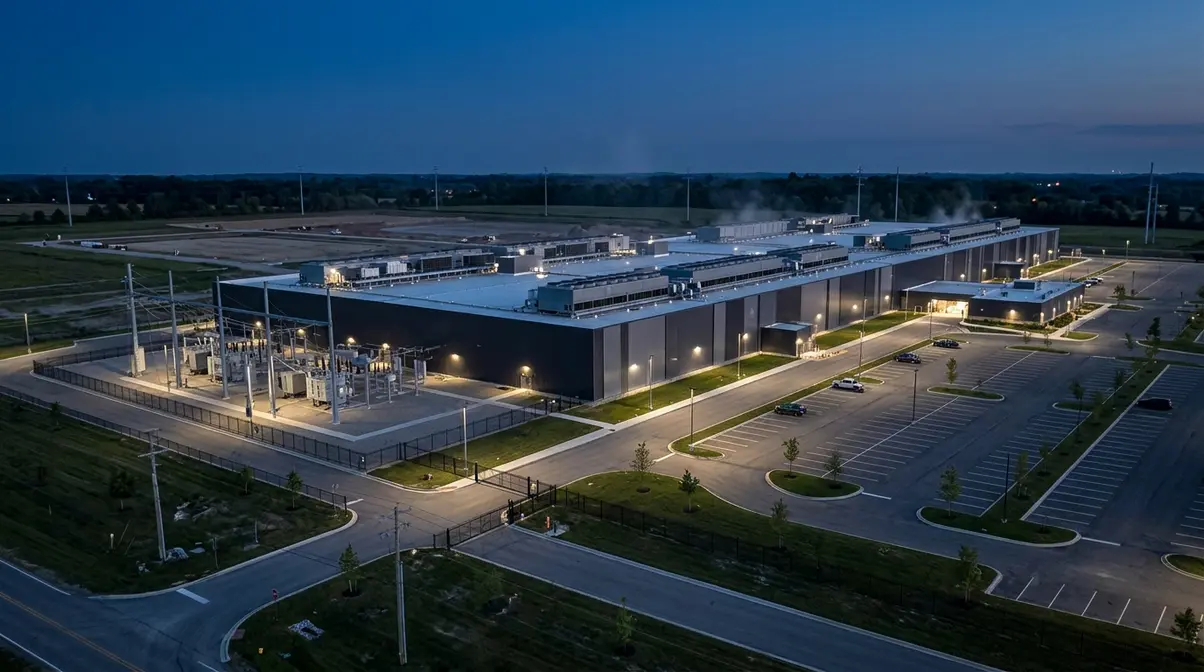
    Meta has announced the commencement of operations at its new data center campus in Ohio, known as Prometheus. The facility has officially brought its first phase online to support the company’s expanding infrastructure requirements.

    According to the company, the newly operational data center is already being utilized to support the training of Muse, one of Meta’s artificial intelligence models. This development highlights Meta’s ongoing investment in the physical infrastructure necessary to scale its generative AI and machine learning capabilities.

    Further details regarding the full scope of the Prometheus campus or specific technical specifications of the facility were not disclosed in the initial announcement.

    Source: Data Center Dynamics
    Original article: https://www.datacenterdynamics.com/en/news/meta-details-ohio-prometheus-data-center-campus-with-first-phase-live/

  • Short seller raises concerns over Csquare financial and portfolio structure

    Short seller raises concerns over Csquare financial and portfolio structure

    A short seller has publicly targeted Csquare, raising significant concerns regarding the data center operator’s business model. According to reports, the investor has characterized the company’s shares as worthless, citing issues related to its portfolio and capital structure.

    As of this reporting, the allegations remain claims made by the short-selling party. The development highlights a critical look at the underlying financial stability of firms operating within the data center sector, which remains under pressure to balance rapid infrastructure expansion with complex debt and asset management.

    DEROBS continues to monitor the situation for any official response from Csquare or further documentation regarding these financial allegations.

    Source: Data Center Dynamics
    Original article: https://www.datacenterdynamics.com/en/news/short-seller-bets-against-csquare-says-data-center-firms-shares-are-worthless/