Author: DEROBS

  • Anthropic IPO filing highlights cross-platform engagement strategy

    Anthropic IPO filing highlights cross-platform engagement strategy

    Recent regulatory filings for Anthropic’s initial public offering (IPO) have shed light on the company’s efforts to increase customer retention and product integration. According to the S-1 filing, more than half of the company’s enterprise customers who spend over $100,000 annually are now utilizing both the Claude Platform and a first-party application.

    This dual-usage strategy appears designed to foster deeper integration within client workflows, creating a “stickier” relationship with enterprise accounts. Industry observers have noted that this approach mirrors cross-selling playbooks previously employed by major cloud and platform providers, such as Amazon, to consolidate their footprint within corporate IT environments.

    By driving adoption across both platform infrastructure and standalone application tools, Anthropic aims to increase the lifetime value of its high-spending clients while establishing its technology as a core component of their digital operations.

    Source: TechCrunch
    Original article: https://techcrunch.com/2026/10/26/anthropics-ipo-filing-reveals-its-strategy-for-keeping-enterprise-customers-hooked/

  • Advancing flexibility in data center backup power systems

    Advancing flexibility in data center backup power systems

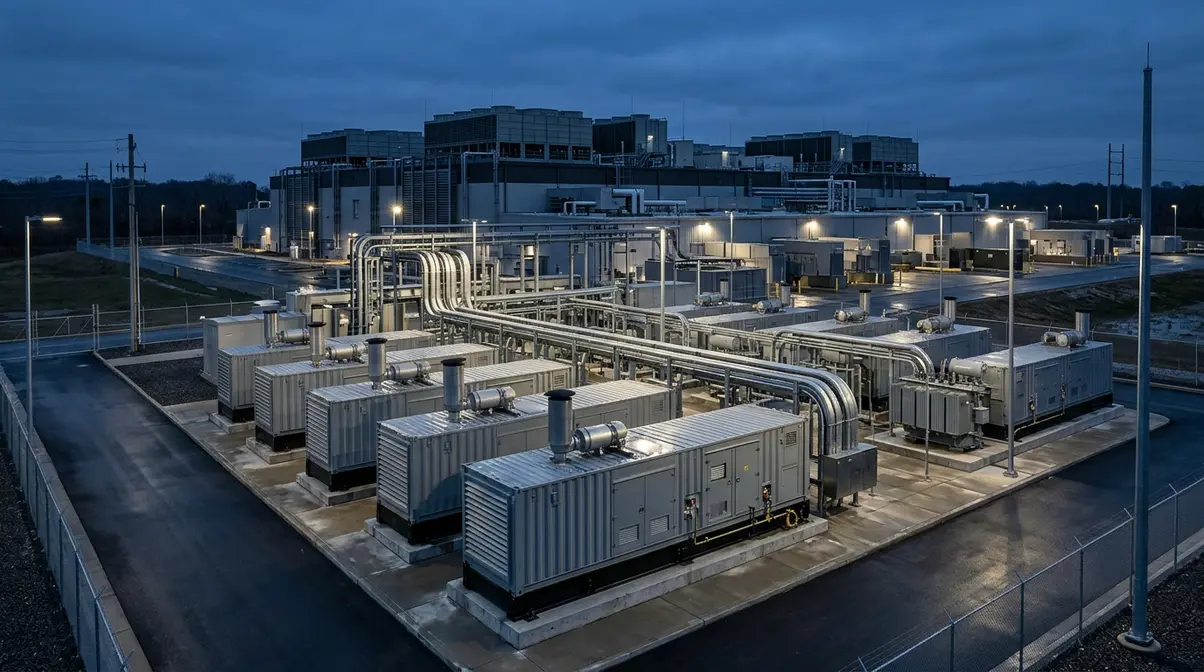
    As data centers continue to scale to meet increasing demand, the design and management of backup power systems are undergoing a shift toward greater operational flexibility. Industry discussions suggest that modernizing these systems requires looking beyond traditional configurations and focusing on the capability to adapt from the engine level up.

    Building flexibility into the foundation of power infrastructure allows facilities to better manage energy loads and respond to the demands of high-density computing environments. By prioritizing adaptable engine architecture, operators aim to enhance system resilience while maintaining the reliability required for critical digital infrastructure.

    Source: Data Center Dynamics
    Original article: https://www.datacenterdynamics.com/en/opinions/the-next-evolution-of-data-center-backup-power/

  • Verizon secures $2 billion AI infrastructure agreement with AWS

    Verizon secures $2 billion AI infrastructure agreement with AWS

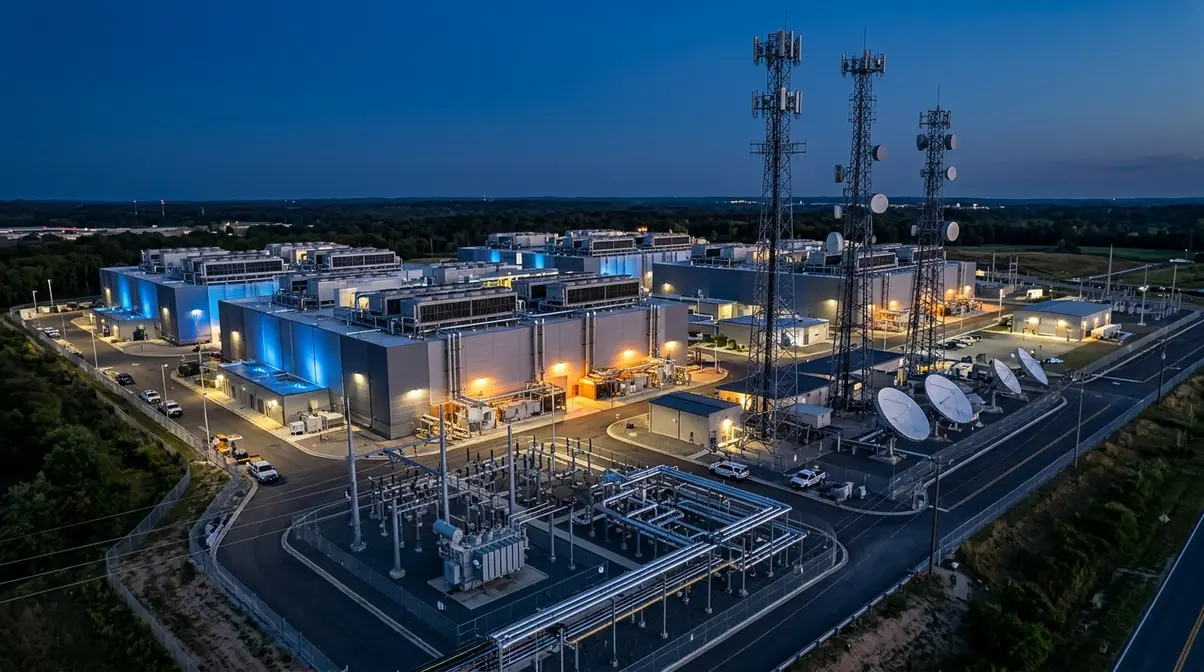
    Verizon has entered into a $2 billion agreement with Amazon Web Services (AWS) to bolster its AI infrastructure capabilities. The investment underscores the telecommunications provider’s strategic focus on integrating advanced cloud and artificial intelligence systems into its operations.

    The announcement follows the company’s recent disclosure of strong third-quarter financial earnings, signaling a period of robust growth and capital allocation toward digital transformation. While specific technical milestones of the partnership were not disclosed in the initial report, the deal represents a significant commitment to scaling AI-ready infrastructure.

    Source: Data Center Dynamics
    Original article: https://www.datacenterdynamics.com/en/news/verizon-signs-2bn-aws-ai-infrastructure-deal/

  • Scaling enterprise agentic retrieval with Amazon Bedrock and AWS CDK

    Scaling enterprise agentic retrieval with Amazon Bedrock and AWS CDK

    Recent advancements in generative AI infrastructure have introduced enterprise-grade agentic retrieval capabilities within Amazon Bedrock. Unlike traditional, single-shot Retrieval Augmented Generation (RAG) systems, which perform one retrieval and one generation, these agentic architectures utilize reasoning agents to iteratively plan and retrieve information as needed. This approach addresses common RAG limitations, such as handling multi-corpus queries or questions requiring refinement after an initial look.

    The shift to Managed Knowledge Bases

    Amazon Bedrock now provides Managed Knowledge Bases (Type: MANAGED), which automate the ingestion, storage, indexing, and retrieval processes. This eliminates the need for users to manually provision, scale, or maintain vector databases. By using the AgenticRetrieveStream API, developers can access first-class agentic capabilities, including multi-turn planning and tool-driven retrieval. This managed approach integrates with the AgentCore Gateway, which exposes knowledge bases as Model Context Protocol (MCP) tools for the agent to consult.

    Observability and evaluation as core requirements

    As agentic systems introduce complex, loop-based reasoning, traditional debugging methods become insufficient. To address this, the current deployment model incorporates comprehensive observability and evaluation directly into the infrastructure. By utilizing the AWS Cloud Development Kit (AWS CDK), developers can provision a complete solution that includes two Amazon CloudWatch dashboards and seven layers of telemetry, covering areas such as ingestion metrics, token usage, retrieval quality, and evaluation scores.

    Infrastructure as code with AWS CDK

    Using AWS CDK for this architecture simplifies the management of interconnected stacks. The system consists of four distinct stacks—managing knowledge bases, gateways, agents, and observability dashboards—that are cross-referenced to derive a deployment sequence automatically. This approach replaces manual export/import bookkeeping, reducing the risk of configuration drift and ensuring that complex systems remain maintainable.

    Evaluation is supported through both on-demand and continuous paths. The system enables automated scoring using built-in evaluators—such as faithfulness, correctness, and tool-selection accuracy—which provide continuous feedback on the agent’s performance. These evaluations are essential for maintaining groundedness and auditability in enterprise applications, ensuring that synthesized answers can always be traced back to their source passages.

    Source: aws.amazon.com
    Original article: https://aws.amazon.com/blogs/machine-learning/build-agentic-retrieval-on-a-managed-amazon-bedrock-knowledge-base-with-cdk/

  • Cadence opens new Nvidia-powered AI data center in Munich

    Cadence opens new Nvidia-powered AI data center in Munich

    Cadence has announced the opening of a new AI-focused data center located in Munich, Germany. The facility is equipped with Nvidia technology to enhance the company’s computing capabilities for complex technical workloads.

    According to the company, the primary purpose of the new infrastructure is to support electronic design automation (EDA) and simulation processes. In addition to these internal research and development functions, the data center is intended to provide sovereign AI cloud services.

    The integration of Nvidia hardware into this Munich-based facility marks a strategic effort by Cadence to strengthen its local infrastructure footprint while addressing the increasing industry demand for specialized, high-performance computing resources capable of handling sophisticated AI and simulation tasks.

    Source: Data Center Dynamics
    Original article: https://www.datacenterdynamics.com/en/news/cadence-unveils-nvidia-powered-ai-data-center-in-munich-germany/

  • Optimizing AI agent efficiency through prompt caching on Amazon Bedrock

    Optimizing AI agent efficiency through prompt caching on Amazon Bedrock

    AI agents often face a significant operational hurdle: for every step they take—whether calling a tool or processing a result—they must re-read their entire history, including instructions and tool definitions. This repetitive process, akin to a constant “Groundhog Day” loop, increases latency and drives up costs. AWS has released technical guidance on using prompt caching with Amazon Bedrock to break this cycle and improve agent performance.

    How prompt caching functions

    Large language models (LLMs) typically process input tokens by performing a “prefill” operation, which builds the model’s working state, or key-value (KV) vectors. Prompt caching allows developers to save this state after the prefill phase. On subsequent requests that utilize the same input, the service loads the saved state rather than recomputing it, significantly lowering the number of tokens that require processing.

    Implementation strategies

    Developers can utilize two primary modes of prompt caching on Amazon Bedrock to manage their agents:

    • Implicit caching: The service automatically determines where to cache the reusable prefix as a conversation grows, providing a default approach for many agentic workflows.
    • Explicit caching: Developers define specific breakpoints—using prompt_cache_breakpoint—to mark shared content such as system instructions or core tool definitions. This ensures consistent reuse across different user sessions or helper subagents.

    AWS recommends a combined approach where explicit markers establish a shared starting point, while implicit caching manages the evolving history of the interaction.

    Business and operational impact

    By effectively caching static components like tool lists and system instructions, organizations can achieve meaningful cost reductions. For instance, tests on the GPT-6 Astra model demonstrated input cost savings of approximately 60% compared to non-cached workloads. To maximize these benefits, AWS advises keeping cache keys stable for groups of related requests and ensuring that any dynamic information—such as user-specific data or request IDs—is placed after the cached portion of the prompt.

    As agents scale and delegate tasks to subagents, the use of a “warm” shared prefix can prevent redundant processing, allowing multiple helper agents to operate more efficiently. Developers are encouraged to monitor cache performance using Amazon CloudWatch metrics, such as CacheReadInputTokenCount and CacheWriteInputTokenCount, to track the balance between cache write costs and overall input savings.

    Source: aws.amazon.com
    Original article: https://aws.amazon.com/blogs/machine-learning/groundhog-day-for-ai-agents-prompt-caching-patterns-for-using-openai-models-on-amazon-bedrock/

  • Ecoblox and Rimac announce modular data center collaboration

    Ecoblox and Rimac announce modular data center collaboration

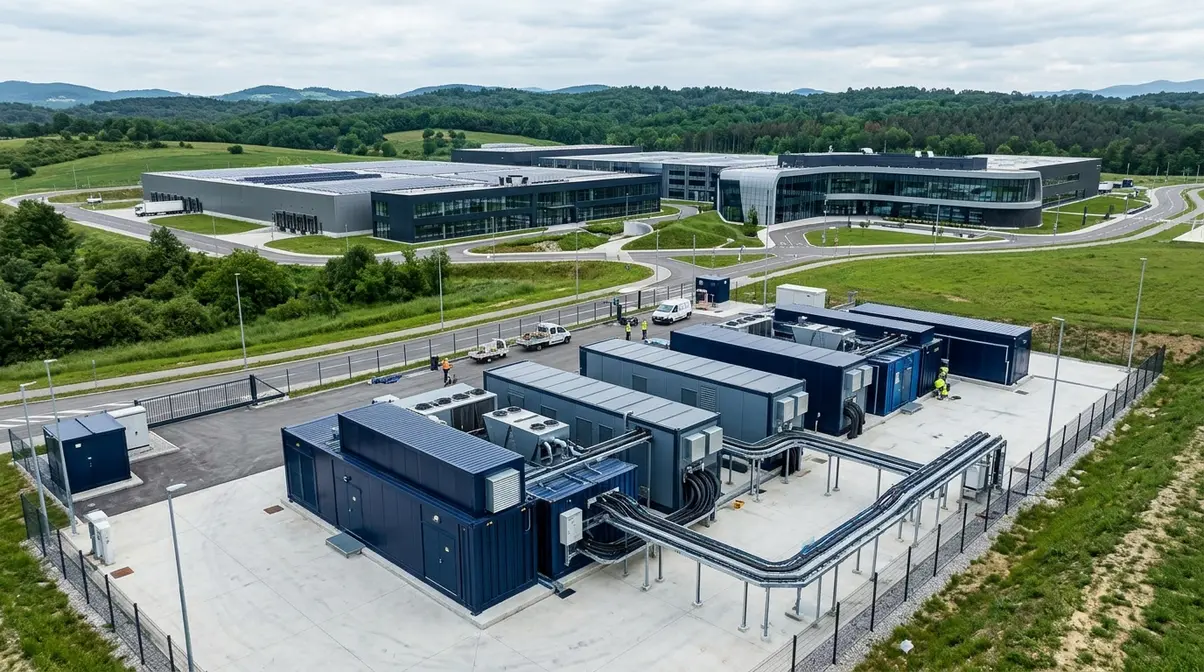
    Ecoblox has entered into a partnership with Rimac to develop and deploy a modular data center solution. The collaboration aims to leverage modular architecture to support evolving infrastructure needs.

    As part of the initial project phase, the companies have scheduled the first deployment of this modular system at Rimac’s campus located in Kerestinec, Croatia.

    No further technical specifications or project timelines were provided in the initial announcement.

    Source: Data Center Dynamics
    Original article: https://www.datacenterdynamics.com/en/news/ecoblox-partners-with-rimac-on-modular-data-center-solution/

  • Tech Mahindra and Mastercard collaborate to integrate B2B payments into enterprise platforms

    Tech Mahindra and Mastercard collaborate to integrate B2B payments into enterprise platforms

    Tech Mahindra, an AI-powered digital transformation and consulting services provider, has announced a new partnership with Mastercard. The collaboration aims to modernize business-to-business (B2B) payments by integrating secure, virtual card and payment functionalities directly into enterprise resource planning (ERP) and procurement platforms.

    By embedding these payment capabilities into existing enterprise infrastructure, the partnership seeks to streamline procurement and payment processes for global enterprises. The initiative focuses on enhancing the efficiency and security of B2B transactions by enabling payments to be executed within the workflows that organizations already use to manage their procurement and resource planning.

    This development is intended to provide a more integrated experience for businesses seeking to digitize their financial operations, moving away from legacy payment processes in favor of embedded solutions that can be managed within their primary enterprise software environments.

    Source: Finextra
    Original article: https://www.finextra.com/pressarticle/111438/tech-mahindra-and-mastercard-team-on-embedded-b2b-payments?utm_medium=rssfinextra&utm_source=finextrafeed

  • Local authorities seek two suspects following repeated thefts at Culpeper data center site

    Local authorities seek two suspects following repeated thefts at Culpeper data center site

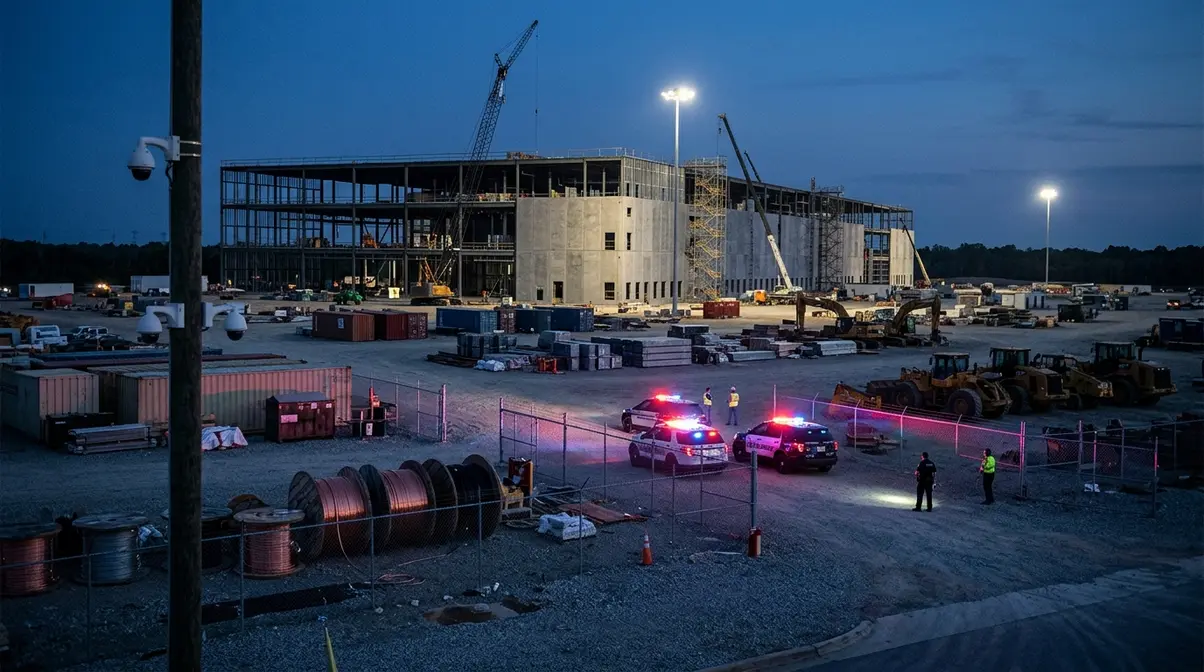
    Authorities in Culpeper are currently investigating a series of security incidents at a local data center construction site. According to reports, the site has been the target of multiple thefts involving copper and various construction tools.

    Local sheriffs have released information regarding two masked individuals currently identified as suspects in connection with these recurring incidents. No further details regarding the extent of the losses or specific security measures at the site were provided in the initial reports.

    Source: Data Center Dynamics
    Original article: https://www.datacenterdynamics.com/en/news/thieves-repeatedly-steal-copper-and-tools-from-culpeper-data-center-construction-site/

  • G42 signs memorandum of understanding for AI infrastructure in Greece

    G42 signs memorandum of understanding for AI infrastructure in Greece

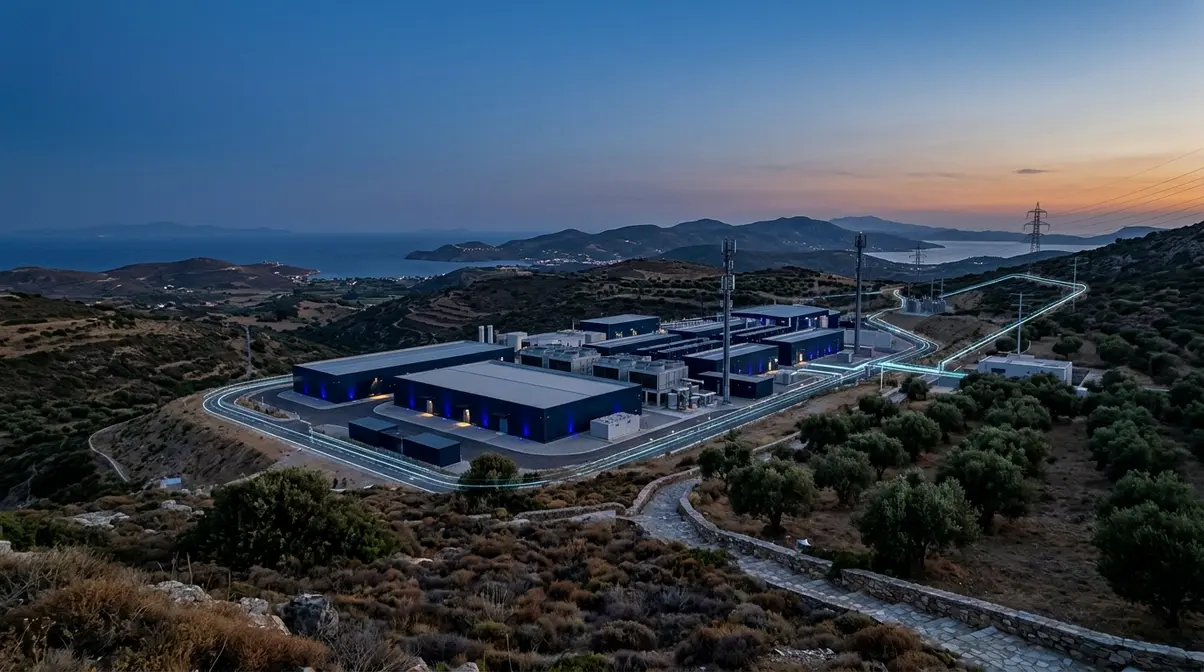
    The United Arab Emirates-based technology firm G42 has formalized an agreement with the Greek infrastructure investor Copelouzos Group. The two companies have signed a memorandum of understanding (MoU) focused on the development of artificial intelligence infrastructure.

    As of the current reporting, specific details regarding the financial scale, location, or technical specifications of the planned infrastructure remain limited. The collaboration marks a strategic connection between the UAE-based AI developer and the Greek investment firm, which holds significant interests in the regional infrastructure sector.

    The announcement indicates a developing interest in establishing specialized digital foundations to support AI deployment within the Greek market. Further details concerning the project roadmap or implementation timeline have not yet been disclosed.

    Source: Data Center Dynamics
    Original article: https://www.datacenterdynamics.com/en/news/g42-signs-mou-for-ai-infrastructure-in-greece/