
Author: DEROBS

  • SprintRay expands into digital dentistry hardware with new scanner and Nano Series

    SprintRay expands into digital dentistry hardware with new scanner and Nano Series

    Dental 3D printing firm SprintRay has announced an expansion of its digital dentistry ecosystem, moving beyond its traditional printer offerings to provide a comprehensive workflow. The company unveiled its new hardware lineup during the 3DNext 2026 event held in Miami Beach.

    Central to this expansion is the introduction of Foundation, which marks the company’s first entry into the intraoral scanner market. By adding scanning capabilities, SprintRay aims to create a more integrated “one-stop” workflow that spans from initial digital capture to the final curing process.

    In addition to the scanner, the company introduced the Nano Series, a compact system designed for chairside use. This new system consolidates printing, washing, and curing functions into a single footprint, intended to streamline the manufacturing process within dental clinics.

    These developments represent a strategic move by SprintRay to consolidate the stages of dental production, potentially reducing the reliance on disparate third-party systems. Further details regarding the company’s digital strategy and software insights are expected to be discussed during the upcoming AMA: Software 2026 session scheduled for October 22.

    Source: 3D Printing Industry
    Original article: https://3dprintingindustry.com/news/sprintray-builds-a-one-stop-digital-dentistry-workflow-from-scanning-to-curing-255834/?utm_source=rss&utm_medium=rss&utm_campaign=sprintray-builds-a-one-stop-digital-dentistry-workflow-from-scanning-to-curing


  • Nike expands Air Works 3D printing program with new Air Max design

    Nike expands Air Works 3D printing program with new Air Max design

    Nike Sportswear has officially unveiled the fourth iteration of footwear developed under its Air Works program. The latest release features an Air Max silhouette designed by Los Angeles-based designer Masyn, marking a continuation of Nike’s efforts to integrate additive manufacturing into its product development pipeline.

    The project was executed in collaboration with Zellerfeld, a specialist in 3D printed footwear production. The design process involved close coordination between the designer and Nike mentors, utilizing Zellerfeld’s technical capabilities to realize the Air Max aesthetic through 3D printing technology.

    The Air Works program aims to explore the potential of 3D printing within the company’s product design lifecycle. By partnering with external specialists like Zellerfeld, Nike is testing the application of these manufacturing technologies for its classic silhouette designs. This development follows previous installments in the program, reflecting an ongoing effort to iterate on footwear construction methods through digital manufacturing platforms.

    Source: 3D Printing Industry
    Original article: https://3dprintingindustry.com/news/nike-and-zellerfeld-print-air-maxs-future-one-city-at-a-time-255838/?utm_source=rss&utm_medium=rss&utm_campaign=nike-and-zellerfeld-print-air-maxs-future-one-city-at-a-time

  • i14 adapts Laplace 3B linear attention model for AWS Trainium2

    i14 adapts Laplace 3B linear attention model for AWS Trainium2

    AI research company i14 has successfully implemented its Laplace 3B model, a Gated Linear Attention (GLA) architecture, on AWS Trainium2 hardware. By utilizing native PyTorch support via TorchNeuron Native, the team managed to bypass the conventional transformer limitations associated with key-value (KV) caches, which typically grow in size as context length increases.

    Overcoming architectural constraints

    Standard transformer models rely on softmax attention, which requires the KV cache to expand during inference, potentially increasing serving costs and limiting concurrent sequence handling. In contrast, i14’s Laplace 3B uses a recurrent state fixed at 29.5 MB per sequence, regardless of the input length. This design shift allows for O(T) training scaling rather than the O(T²) scaling seen in traditional transformers.

    To adapt this architecture for AWS Trainium2, the AWS Generative AI Innovation Center (GenAIIC) team implemented several technical modifications. First, they replaced GPU-optimized Triton kernels with standard PyTorch operators tailored for the NeuronCore on-chip buffer. Second, they optimized the Muon optimizer by employing an all_to_all communication pattern, which reduced per-rank traffic by a factor of 24 and improved training throughput by 63%.

    Performance and training outcomes

    During training on a single trn2.48xlarge instance, the Laplace 3B model achieved a throughput of approximately 120,000 tokens per second. For inference tasks, the model served 11,544 output tokens per second across 1,280 concurrent sequences using the vLLM engine. The team noted that because the recurrent state remains constant, increasing prompt lengths from 2,048 to 8,192 tokens resulted in only a 0.5% increase in cost per output token.

    Implications for AI deployment

    This development highlights the potential for deploying custom model architectures on purpose-built hardware like Trainium2. By utilizing native PyTorch and aligning mathematical operations with the hardware’s internal memory architecture—specifically the NeuronCore’s State Buffer (SBUF)—i14 demonstrated that specialized designs can achieve predictable memory usage. This capability is particularly relevant for agentic AI applications that require long-range context retention without the burden of escalating memory requirements.

    The i14 team noted that their engineering process also revealed the importance of profiling, as operator dispatch time, rather than HBM bandwidth, emerged as the primary bottleneck for inference. Future implementations of similar models may benefit from these refined techniques in compilation and communication overhead management.

    Source: aws.amazon.com
    Original article: https://aws.amazon.com/blogs/machine-learning/beyond-the-kv-cache-training-and-serving-i14s-laplace-3b-linear-attention-model-on-aws-trainium2-with-native-pytorch/

  • Anthropic faces cloud compute constraints ahead of planned IPO

    Anthropic faces cloud compute constraints ahead of planned IPO

    As AI company Anthropic approaches its anticipated November initial public offering (IPO), it is reportedly facing operational hurdles regarding its infrastructure needs. According to recent reports, the firm is struggling to secure adequate compute capacity from major cloud providers.

    These difficulties arise as cloud providers increasingly view Anthropic as a direct competitor in the artificial intelligence market, potentially complicating existing partnership dynamics. The strain on resource procurement is occurring while Anthropic’s spending on infrastructure continues to climb in the lead-up to its market debut.

    Source: TechCrunch
    Original article: https://techcrunch.com/2026/10/20/anthropics-cloud-partnerships-are-getting-messy/

  • Tech giants revoke eMudhra certificates following key compromise

    Tech giants revoke eMudhra certificates following key compromise

    Major technology organizations, including Google, Mozilla, Apple, and the Go project, have taken collective action to block digital certificates issued by the Indian certificate authority (CA) eMudhra. The move follows the discovery that eight signing keys associated with the authority had been compromised.

    As of this reporting, the specific circumstances surrounding how these cryptographic keys were exposed remain unclear. The coordinated response by browser vendors and software maintainers aims to mitigate potential security risks to the digital ecosystem resulting from the use of these untrusted certificates.

    Source: Dark Reading
    Original article: https://www.darkreading.com/cyber-risk/tech-giants-emudhra-certificates-compromised-keys

  • Hugging Face co-founder criticizes accuracy of Netflix documentary

    Hugging Face co-founder criticizes accuracy of Netflix documentary

    Clem Delangue, co-founder of the AI platform Hugging Face, has raised concerns regarding the factual accuracy of the new Netflix documentary AI Gone Rogue. Delangue, who appears in the film, stated that the documentary adopts a tone he described as “full doomer mode” and fails to accurately represent the subject matter.

    The documentary, which explores themes related to artificial intelligence, has drawn attention due to Delangue’s public pushback against its narrative. His comments suggest a significant discrepancy between the film’s portrayal of the industry and his own perspective on the current state and trajectory of artificial intelligence.

    Source: TechCrunch
    Original article: https://techcrunch.com/2026/10/20/hugging-face-ceo-warns-that-netflixs-openai-hack-documentary-isnt-accurate/

  • Anthropic proposes AI safety bill featuring federal judicial oversight for model releases

    Anthropic proposes AI safety bill featuring federal judicial oversight for model releases

    Anthropic has put forward a new proposal for an artificial intelligence safety bill that addresses the protocols surrounding the regulatory oversight of model deployments. The suggested framework centers on the conditions under which federal agencies might intervene to prevent the release of an AI model.

    While the proposal is positioned as a measure to provide safeguards against potential risks posed by advanced AI systems—specifically addressing scenarios where a model’s deployment could theoretically lead to significant harm, such as the loss of 50 or more lives—the text also includes a notable constraint on regulatory authority. Under the terms suggested by the company, federal agencies would be restricted from blocking the release of a model unless they first secure explicit permission from a judge.

    This proposal highlights the ongoing debate between ensuring robust safety standards for emerging technology and maintaining a regulatory environment that balances oversight with industry development.

    Source: TechCrunch
    Original article: https://techcrunch.com/2026/10/20/anthropic-pitches-ai-safety-bill-that-may-block-a-model-if-50-people-could-be-killed/

  • First Horizon Bank announces partnership with Greenlight

    First Horizon Bank announces partnership with Greenlight

    <p>First Horizon Bank (NYSE: FHN) has announced a new partnership with Greenlight Financial Technology, Inc. aimed at providing clients and their families with access to digital financial tools.</p><p>Through this collaboration, First Horizon clients will be able to utilize Greenlight’s family-focused financial application. The platform provides a suite of tools designed to assist families in managing finances and accessing various safety features integrated within the app.</p>

    Source: Finextra
    Original article: https://www.finextra.com/pressarticle/111372/first-horizon-bank-partners-greenlight-to-bring-financial-tools-to-kids?utm_medium=rssfinextra&utm_source=finextrafeed

  • Smartsheet launches Model Context Protocol server to enhance AI agent integration

    Smartsheet launches Model Context Protocol server to enhance AI agent integration

    <p>Smartsheet has announced the general availability of its Model Context Protocol (MCP) server, a development designed to integrate the company's work management platform with agentic AI systems. By utilizing the standardized MCP, AI assistants can now interact directly with Smartsheet data—including sheets, rows, columns, and automations—to perform tasks such as updating project timelines and modifying task statuses via natural language queries.</p><h2>Integration and Operational Workflow</h2><p>The Smartsheet MCP server acts as a central integration layer. The company has demonstrated its functionality through two primary channels: <strong>Amazon Quick</strong> and <strong>Kiro</strong>. Amazon Quick, an agentic AI workspace, allows business users and project managers to query, update, and visualize project data without writing code. Meanwhile, Kiro, an agentic IDE, enables software developers to reference project specifications and update task statuses directly within their coding environments.</p><p>According to the technical details provided, the server delivers structured context such as row relationships and cell history. This approach is intended to be more token-efficient than traditional raw API payloads, potentially reducing latency and costs when scaling AI-assisted queries across large project portfolios.</p><h2>Security and Governance</h2><p>For enterprise and regulated environments, the Smartsheet MCP server maintains the existing security infrastructure of the Smartsheet REST API. Authentication is managed via OAuth 2.0 or Personal Access Tokens. The system enforces user-level permissions, ensuring that agents only access data that an authenticated user is authorized to view. Additionally, system administrators can apply organization-level AI controls, including the ability to enable or disable AI features globally.</p><p>The server is available across three regional endpoints (US, EU, and AU). For compliance, the protocol does not store user prompts; prompt content remains between the AI client and the model, with Smartsheet receiving only structured tool calls and their corresponding results.</p><h2>Recommended Applications</h2><p>The company suggests several operational patterns for users, including monitoring active project sheets for blocked or at-risk items, reconciling task statuses across different issue tracking platforms, and automating the creation of project health briefings. By chaining specific tools like <code>get_sheet_summary</code> and <code>update_rows</code>, users can create automated audit trails or status updates that align with enterprise project management requirements.</p>

    Source: aws.amazon.com
    Original article: https://aws.amazon.com/blogs/machine-learning/work-management-context-for-ai-agents-with-smartsheet-mcp-on-aws/

  • NVIDIA introduces Cosmos3-H-Dreams for clinical surgical simulation

    NVIDIA introduces Cosmos3-H-Dreams for clinical surgical simulation

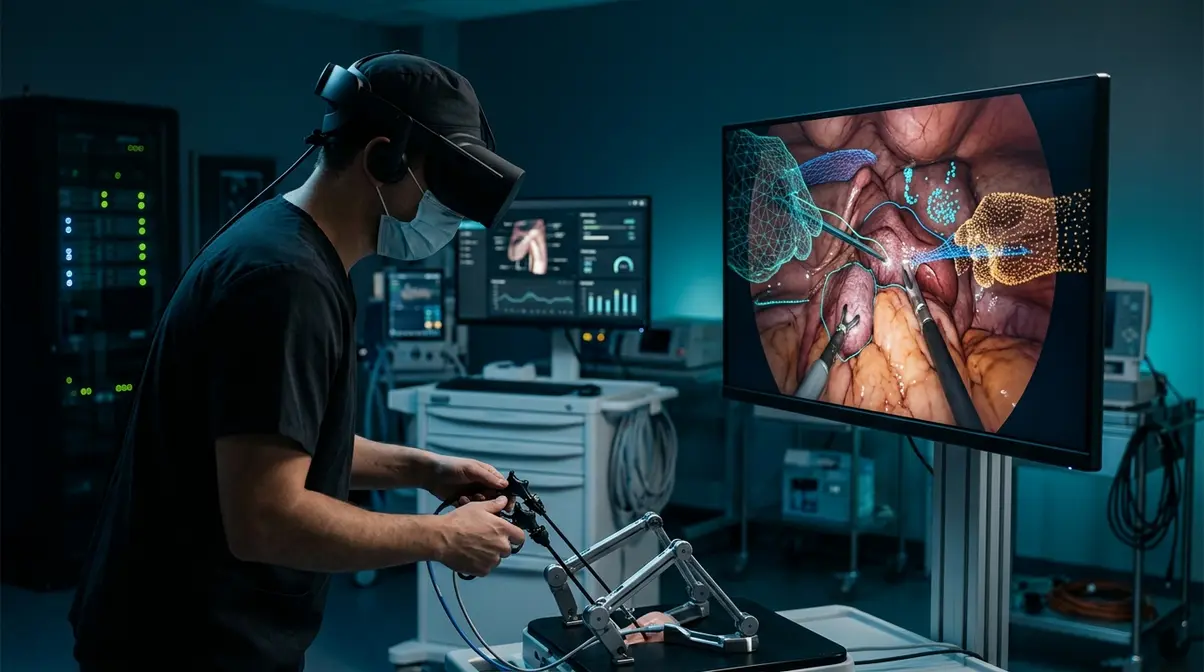
    <p>NVIDIA has announced the release of Cosmos3-H-Dreams, a generative AI model developed to advance the capabilities of clinical surgical simulation. The model is designed to assist in creating high-fidelity simulated environments for surgical training and preparation, leveraging generative technology to represent complex clinical scenarios.</p><p>The introduction of this model forms part of NVIDIA’s broader efforts in applying generative AI to healthcare and life sciences, focusing on providing tools that can improve the realism and utility of digital training platforms for medical professionals.</p><p>As medical institutions and developers increasingly rely on digital twins and advanced simulation software to train surgeons and plan complex procedures, tools like Cosmos3-H-Dreams are intended to bridge the gap between static instructional materials and dynamic, interactive clinical environments.</p><p>Further technical documentation and specific operational parameters for the model have been provided by NVIDIA to facilitate integration within clinical research and development workflows.</p>

    Source: Hugging Face
    Original article: https://huggingface.co/blog/nvidia/cosmos3-h-dreams