Author: DEROBS

  • Copper theft leads to broadband outages in Thurnscoe

    Copper theft leads to broadband outages in Thurnscoe

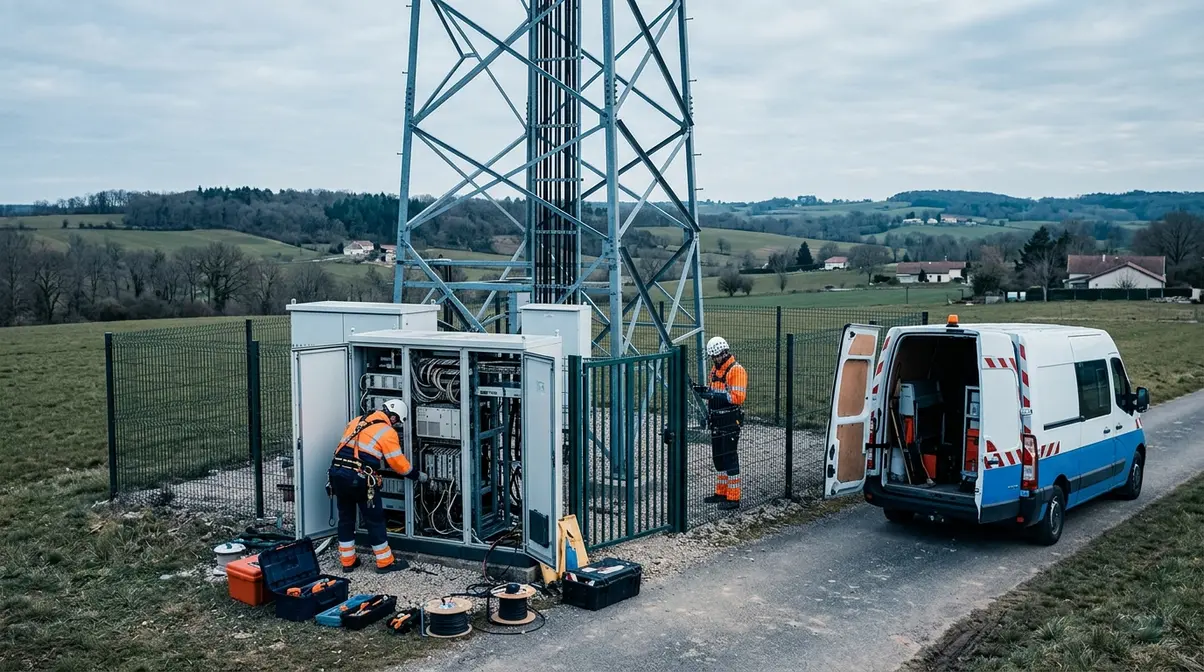
    <p>Thousands of residents in Thurnscoe, UK, have experienced a major broadband outage caused by the theft of telecommunications cables. The incident, which involved the removal of physical infrastructure, was reportedly motivated by the value of the copper contained within the lines.</p><p>Openreach, the network operator responsible for the affected infrastructure, confirmed that the theft has resulted in service disruptions for thousands of users in the area. Such incidents highlight the ongoing vulnerability of physical digital infrastructure to theft and the subsequent impact on local connectivity.</p>

    Source: Data Center Dynamics
    Original article: https://www.datacenterdynamics.com/en/news/cable-theft-causes-openreach-broadband-outage-for-thousands-in-thurnscoe-uk/

  • Orange phases out 2G network in France

    Orange phases out 2G network in France

    <p>Orange has confirmed the retirement of its 2G network infrastructure in France. The move marks a shift in the company's operational focus, as it moves away from legacy standards to prioritize support for more modern telecommunications technologies.</p><p>By decommissioning the aging 2G network, Orange aims to concentrate its efforts and resources on current-generation infrastructure. This transition is part of a broader industry trend among major operators to sunset older cellular networks in order to optimize spectrum efficiency and reduce maintenance overhead.</p><p>While the company has indicated that its attention is shifting to modern technologies, no specific timeline for the final phase-out of all related services was detailed beyond the announcement that the 2G network is no longer part of its active focus.</p>

    Source: Data Center Dynamics
    Original article: https://www.datacenterdynamics.com/en/news/orange-says-au-revoir-to-2g-network-in-france/

  • Community banking and social initiatives discussed at Sustainable Finance Live 2026

    Community banking and social initiatives discussed at Sustainable Finance Live 2026

    <p>At the 2026 Sustainable Finance Live conference, hosted by Finextra, industry experts gathered to discuss the intersection of community-oriented financial models and social welfare. A key afternoon panel session, titled ‘From Field to Estate to Thriving Community’, focused on the potential for community banking to serve as a catalyst for local economic stability.</p><p>The discussion highlighted practical approaches for financial institutions to empower local food vendors. By leveraging community banking structures, panelists suggested that financial services can be more effectively aligned with the needs of local food systems, contributing to efforts to combat food poverty. Beyond local vendor support, the session also addressed challenges and strategies related to the financing of pensions, linking broader financial sustainability goals with community-level outcomes.</p>

    Source: Finextra
    Original article: https://www.finextra.com/newsarticle/48621/sustainable-finance-live-fighting-food-poverty-and-financing-pensions?utm_medium=rssfinextra&utm_source=finextrafeed

  • Chinese metal powder manufacturers navigate trade barriers to expand global reach

    Chinese metal powder manufacturers navigate trade barriers to expand global reach

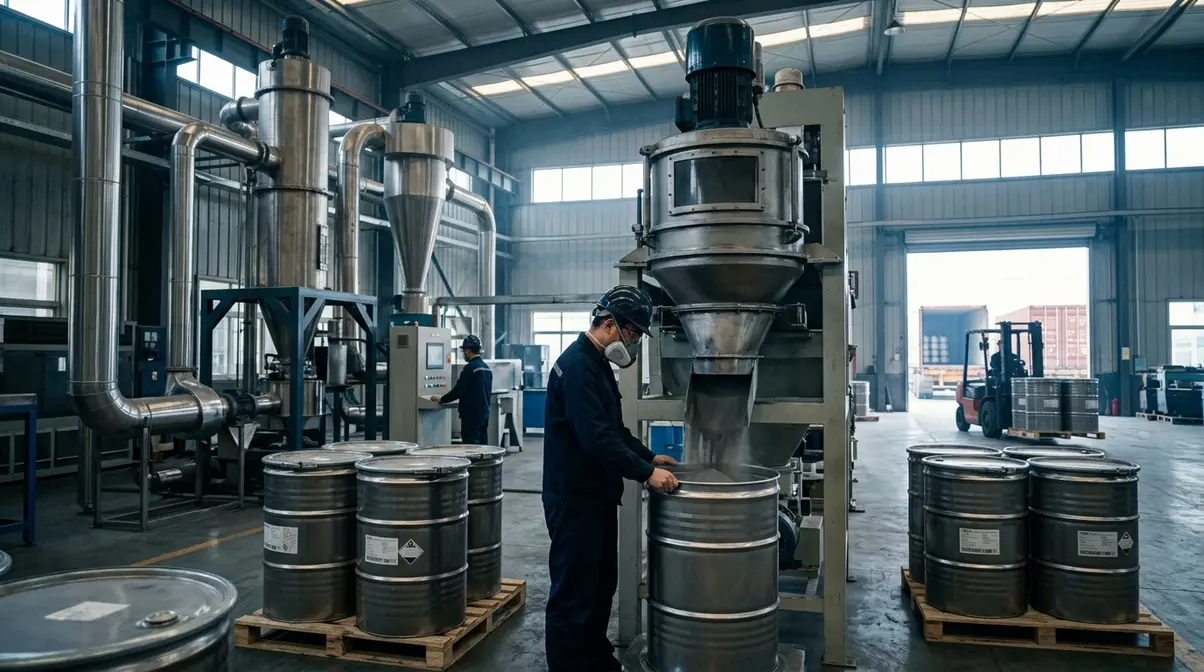
    <p>Metal powder manufacturers in China are actively scaling their production capacity as they look to broaden their footprint in the international market. In a recent discussion with <em>3D Printing Industry</em>, representatives from VMP highlighted an ambitious strategy to transition the company's business model, aiming to lift the proportion of exports from 10% to 50% within the next five years.</p><p>However, this expansion strategy faces several significant headwinds. The global landscape for metal powder production is currently complicated by the implementation of trade tariffs, which directly affect the competitiveness of imported materials. Furthermore, companies must navigate the complexities of material qualification standards in foreign markets. The sector is also witnessing increased investment from Western nations aimed at strengthening domestic supply chains, which could create a more challenging environment for Chinese exporters looking to capture larger market shares abroad.</p><p>These developments underscore the evolving tension between competitive manufacturing output and the regionalization of industrial supply chains in the additive manufacturing sector.</p>

    Source: 3D Printing Industry
    Original article: https://3dprintingindustry.com/news/can-chinese-metal-powder-win-after-tariffs-255827/?utm_source=rss&utm_medium=rss&utm_campaign=can-chinese-metal-powder-win-after-tariffs

  • AWS enables cross-Region access to OpenAI models from Canada

    AWS enables cross-Region access to OpenAI models from Canada

    <p>Amazon Web Services (AWS) has announced that Canadian organizations can now access a suite of OpenAI foundation models—including the GPT-5.6 and GPT-6 families—through Amazon Bedrock using cross-Region inference (CRIS). This development allows users in the Canada (Central) and Canada West (Calgary) Regions to leverage broader capacity pools for generative AI applications without needing to manage complex destination routing.</p><h2>Expanding access to foundation models</h2><p>The models now available through this capability include the GPT-5.6 (Sol, Terra, and Luna), GPT-6 (Astra, Sol, and Luna), and GPT-6.1 (Sol) series. Each model is positioned for specific use cases, ranging from high-performance coding and complex reasoning tasks to cost-effective, high-volume operations. These models support multi-modal inputs, tool calling, and a 1-million-token context window.</p><p>By using inference profiles, developers can route requests to supported destination Regions. AWS provides two profile types: "US geographic," which confines processing to North America (Canada and the U.S.) to meet specific data-residency preferences, and "Global," which accesses a wider range of AWS Regions to ensure service availability during demand spikes.</p><h2>Implementation and governance</h2><p>The integration is accessible via the OpenAI Responses API, the OpenAI Chat Completions API, and the Amazon Bedrock Converse API. AWS has designed the system to integrate with existing observability tools, meaning that despite the processing occurring in a destination Region, logs and CloudWatch metrics remain accessible within the user's source Region in Canada.</p><p>For organizations with strict governance requirements, AWS emphasizes that data at rest remains in the user's home Region by default. Furthermore, customers can implement Service Control Policies (SCPs) to restrict traffic exclusively to permitted inference profiles, ensuring that data processing remains within approved boundaries while still benefiting from the scalability of cross-Region routing.</p><p>This update is intended to assist Canadian enterprises in building and scaling generative AI workloads that require robust reasoning capabilities while navigating local data residency and operational resilience requirements.</p>

    Source: aws.amazon.com
    Original article: https://aws.amazon.com/blogs/machine-learning/access-openai-gpt-models-on-amazon-bedrock-from-canada-with-cross-region-inference/

  • Octave builds secure multi-tenant AI foundation on Amazon Bedrock

    Octave builds secure multi-tenant AI foundation on Amazon Bedrock

    <p>Octave, a provider of cloud-native quality management systems, has developed a specialized multi-tenant AI foundation to help enterprise customers analyze massive volumes of regulated data. Serving over 650 customers across the medical device, pharmaceutical, and food manufacturing sectors, Octave faced the critical requirement of ensuring that sensitive complaint records and audit findings remained strictly isolated between tenants.</p><p>Rather than deploying individual AI features in silos, the engineering team prioritized the construction of a horizontal platform designed to support future AI applications. This strategy, centered on Amazon Bedrock, reduced development cycles for new AI capabilities from months to weeks and cut deployment time per use case by approximately 50 percent, according to the company.</p><p>The architecture relies on a three-layer foundation. First, data preparation utilizes Cohere Embed v4 on Amazon Bedrock to index documents into per-tenant vector stores via Amazon OpenSearch Service. Second, the <em>AgentCore</em> runtime—a capability of Amazon Bedrock AgentCore—enforces hardware-level isolation by executing user requests in dedicated, sanitized microVMs. This approach ensures that data access remains tied to the specific user session rather than shared service roles. Finally, the system incorporates content protection through Amazon Bedrock Guardrails, which filter both input and output to mitigate risks such as prompt injection and unauthorized information disclosure.</p><p>To achieve the necessary throughput for onboarding large datasets, Octave implemented an event-driven pipeline capable of processing documents across diverse formats, including images, PDFs, and email threads. By leveraging the large context window of the embedding models and parallelizing processing via AWS Step Functions and Lambda, the company sustained a pipeline performance of 1.4 million documents per 24 hours per tenant.</p><p>The first production application built on this foundation, the Complaint Triage Assistant, has been in operation for three months. It automates the extraction and summarization of complex complaint records, allowing human quality handlers to focus on decision-making rather than manually searching through archives. Octave maintains that while the system surfaces context and institutional memory, human oversight remains a mandatory component of the quality management workflow.</p><p>The company plans to extend this infrastructure to support additional use cases, including audit readiness monitoring, incident narrative generation, and predictive quality risk scoring.</p>

    Source: aws.amazon.com
    Original article: https://aws.amazon.com/blogs/machine-learning/how-octave-built-a-secure-multi-tenant-ai-foundation-on-amazon-bedrock/


  • Meta’s AI companion Muse reaches 10 million U.S. downloads in 40 days

    Meta’s AI companion Muse reaches 10 million U.S. downloads in 40 days

    <p>Meta’s new AI companion, Muse, has reached a significant milestone by surpassing 10 million downloads in the United States within its first 40 days of availability. This achievement places Muse in an exclusive group of applications that have reached this adoption threshold at a similar pace, a list that also includes Meta’s social platform, Threads.</p><p>Beyond its rapid initial growth, early data indicates that the application is sustaining interest among its user base. According to new reports, Muse is demonstrating higher user retention rates compared to other competing AI-integrated applications currently on the market.</p><p>The growth of Muse highlights a trend in the digital economy where AI-driven assistants are becoming central to consumer engagement strategies for major technology firms. The platform's ability to maintain high retention suggests that its integration or feature set is finding sustained resonance with users in a competitive space for artificial intelligence tools.</p>

    Source: TechCrunch
    Original article: https://techcrunch.com/2026/10/20/metas-muse-hits-10m-u-s-downloads-in-40-days-a-milestone-reached-by-only-11-other-apps/

  • Optimizing multilingual reasoning in open-weight models with Amazon SageMaker HyperPod

    Optimizing multilingual reasoning in open-weight models with Amazon SageMaker HyperPod

    <p>A new technical analysis from Amazon Web Services (AWS) details a framework for fine-tuning open-weight reasoning models to overcome language-specific performance gaps. The report focuses on the challenges of ensuring models maintain correct chain-of-thought reasoning in non-English languages, using the GPT-OSS-20B model as a primary test case on Amazon SageMaker HyperPod.</p><h2>The multilingual reasoning challenge</h2><p>Researchers noted that base models often default to English even when prompted in other languages such as French, German, Spanish, or Italian. In initial evaluations, GPT-OSS-20B demonstrated a 22 percent success rate for reasoning in a requested language, with nearly all correct responses originating from English-language test cases. This mismatch presents a significant hurdle for teams deploying AI to non-English speaking users.</p><h2>SFT and GRPO: A balanced approach</h2><p>The AWS team utilized a combination of supervised fine-tuning (SFT) and Group Relative Policy Optimization (GRPO) to address these deficiencies. The findings suggest that SFT and GRPO serve complementary roles: SFT is essential for teaching a behavior the model does not yet possess, while GRPO acts as a refinement tool for behaviors the model can already perform intermittently.</p><p>In the GPT-OSS-20B experiment, SFT successfully increased the model’s ability to reason in the target language to 100 percent. However, answer-language accuracy reached 62 percent. The team then applied GRPO, which provided an additional eight-point improvement to answer-language accuracy without degrading the reasoning performance established during SFT.</p><h2>Infrastructure and patterns</h2><p>The training stack leveraged Amazon SageMaker HyperPod orchestrated via Amazon Elastic Kubernetes Service (Amazon EKS). The process incorporated the PyTorch TRL library and utilized Low-Rank Adaptation (LoRA) to maintain parameter efficiency. To validate their findings, researchers ran a control experiment on the Qwen2.5-7B model, testing both the multilingual task and the GSM8K benchmark. The results confirmed that GRPO only yields performance gains when there is sufficient 'headroom'—situations where the model exhibits a variety of performance levels—reinforcing that GRPO is ineffective on tasks where a model is already performing at peak accuracy.</p><p>Ultimately, the AWS findings suggest a practical decision framework for developers: use SFT to establish missing capabilities, and reserve GRPO for refining behaviors that the model already exhibits at a basic, albeit inconsistent, level. Before committing compute resources to GRPO, teams are encouraged to verify that the target task possesses the necessary performance variance to allow for meaningful reinforcement.</p>

    Source: aws.amazon.com
    Original article: https://aws.amazon.com/blogs/machine-learning/fine-tuning-gpt-oss-20b-for-multilingual-reasoning-on-amazon-sagemaker-hyperpod/

  • NatWest mandates increased office attendance for 30,000 employees

    NatWest mandates increased office attendance for 30,000 employees

    <p>UK-based banking institution NatWest has issued a directive requiring 30,000 of its employees to increase their time spent working in the office. This policy shift marks a significant change in the bank's operational approach to workplace location.</p><p>The announcement has drawn immediate criticism from the labor union Unite. Representatives from the union have publicly described the mandate as a "kick in the teeth" for the affected workforce, highlighting internal tensions regarding the adjustment to traditional workplace attendance policies.</p>

    Source: Finextra
    Original article: https://www.finextra.com/newsarticle/48622/natwest-orders-30000-staff-to-spend-more-time-in-the-office?utm_medium=rssfinextra&utm_source=finextrafeed

  • Report indicates Eric Schmidt holds 1% stake in Anthropic

    Report indicates Eric Schmidt holds 1% stake in Anthropic

    <p>According to a report from Bloomberg, former Google CEO Eric Schmidt maintains an approximately 1% ownership stake in the artificial intelligence research lab Anthropic.</p><p>The report highlights the extent of the investment relative to the holdings of Anthropic CEO Dario Amodei. While specific details regarding the total equity structure of the company were not provided, the disclosure situates Schmidt's interest alongside other stakeholders in the high-profile AI startup.</p>

    Source: TechCrunch
    Original article: https://techcrunch.com/2026/10/20/eric-schmidt-reportedly-owns-about-half-as-much-of-anthropic-as-ceo-dario-amodei/