
Category: Advanced Manufacturing

  • Sakuu Corporation to go public via $600 million SPAC merger

    Sakuu Corporation to go public via $600 million SPAC merger

    Battery 3D printing firm Sakuu Corporation has announced its intent to join public markets through a definitive business combination agreement with Pyrophyte Acquisition Corp. II (NYSE: PAII), a special purpose acquisition company (SPAC). The transaction, which is valued at $600 million, will facilitate Sakuu’s transition to the New York Stock Exchange.

    The company is currently developing its proprietary Kavian platform, a technology focused on the additive manufacturing of batteries. Following the business combination, Sakuu expects to move forward with the commercial launch of the Kavian platform, which is currently scheduled for 2027.

    As the company prepares for its market debut, the partnership with Pyrophyte Acquisition Corp. II serves as a strategic vehicle for capital acquisition. The agreement underscores the growing interest in scalable, advanced manufacturing solutions within the energy storage sector, particularly for technologies that aim to modernize battery production processes.

    Source: 3D Printing Industry
    Original article: https://3dprintingindustry.com/news/sakuu-plugs-into-public-markets-with-600m-spac-merger-and-a-2027-kavian-launch-255842/?utm_source=rss&utm_medium=rss&utm_campaign=sakuu-plugs-into-public-markets-with-600m-spac-merger-and-a-2027-kavian-launch
  • SprintRay expands into digital dentistry hardware with new scanner and Nano Series

    SprintRay expands into digital dentistry hardware with new scanner and Nano Series

    Dental 3D printing firm SprintRay has announced an expansion of its digital dentistry ecosystem, moving beyond its traditional printer offerings to provide a comprehensive workflow. The company unveiled its new hardware lineup during the 3DNext 2026 event held in Miami Beach.

    Central to this expansion is the introduction of Foundation, which marks the company’s first entry into the intraoral scanner market. By adding scanning capabilities, SprintRay aims to create a more integrated “one-stop” workflow that spans from initial digital capture to the final curing process.

    In addition to the scanner, the company introduced the Nano Series, a compact system designed for chairside use. This new system consolidates printing, washing, and curing functions into a single footprint, intended to streamline the manufacturing process within dental clinics.

    These developments represent a strategic move by SprintRay to consolidate the stages of dental production, potentially reducing the reliance on disparate third-party systems. Further details regarding the company’s digital strategy and software insights are expected to be discussed during the upcoming AMA: Software 2026 session scheduled for October 22.

    Source: 3D Printing Industry
    Original article: https://3dprintingindustry.com/news/sprintray-builds-a-one-stop-digital-dentistry-workflow-from-scanning-to-curing-255834/?utm_source=rss&utm_medium=rss&utm_campaign=sprintray-builds-a-one-stop-digital-dentistry-workflow-from-scanning-to-curing

  • Nike expands Air Works 3D printing program with new Air Max design

    Nike expands Air Works 3D printing program with new Air Max design

    Nike Sportswear has officially unveiled the fourth iteration of footwear developed under its Air Works program. The latest release features an Air Max silhouette designed by Los Angeles-based designer Masyn, marking a continuation of Nike’s efforts to integrate additive manufacturing into its product development pipeline.

    The project was executed in collaboration with Zellerfeld, a specialist in 3D printed footwear production. The design process involved close coordination between the designer and Nike mentors, utilizing Zellerfeld’s technical capabilities to realize the Air Max aesthetic through 3D printing technology.

    The Air Works program aims to explore the potential of 3D printing within the company’s product design lifecycle. By partnering with external specialists like Zellerfeld, Nike is testing the application of these manufacturing technologies for its classic silhouette designs. This development follows previous installments in the program, reflecting an ongoing effort to iterate on footwear construction methods through digital manufacturing platforms.

    Source: 3D Printing Industry
    Original article: https://3dprintingindustry.com/news/nike-and-zellerfeld-print-air-maxs-future-one-city-at-a-time-255838/?utm_source=rss&utm_medium=rss&utm_campaign=nike-and-zellerfeld-print-air-maxs-future-one-city-at-a-time

  • Chinese metal powder manufacturers navigate trade barriers to expand global reach

    Chinese metal powder manufacturers navigate trade barriers to expand global reach

    <p>Metal powder manufacturers in China are actively scaling their production capacity as they look to broaden their footprint in the international market. In a recent discussion with <em>3D Printing Industry</em>, representatives from VMP highlighted an ambitious strategy to transition the company's business model, aiming to lift the proportion of exports from 10% to 50% within the next five years.</p><p>However, this expansion strategy faces several significant headwinds. The global landscape for metal powder production is currently complicated by the implementation of trade tariffs, which directly affect the competitiveness of imported materials. Furthermore, companies must navigate the complexities of material qualification standards in foreign markets. The sector is also witnessing increased investment from Western nations aimed at strengthening domestic supply chains, which could create a more challenging environment for Chinese exporters looking to capture larger market shares abroad.</p><p>These developments underscore the evolving tension between competitive manufacturing output and the regionalization of industrial supply chains in the additive manufacturing sector.</p>

    Source: 3D Printing Industry
    Original article: https://3dprintingindustry.com/news/can-chinese-metal-powder-win-after-tariffs-255827/?utm_source=rss&utm_medium=rss&utm_campaign=can-chinese-metal-powder-win-after-tariffs

  • Creality opens pre-orders for K3 printer featuring four-nozzle system

    Creality opens pre-orders for K3 printer featuring four-nozzle system

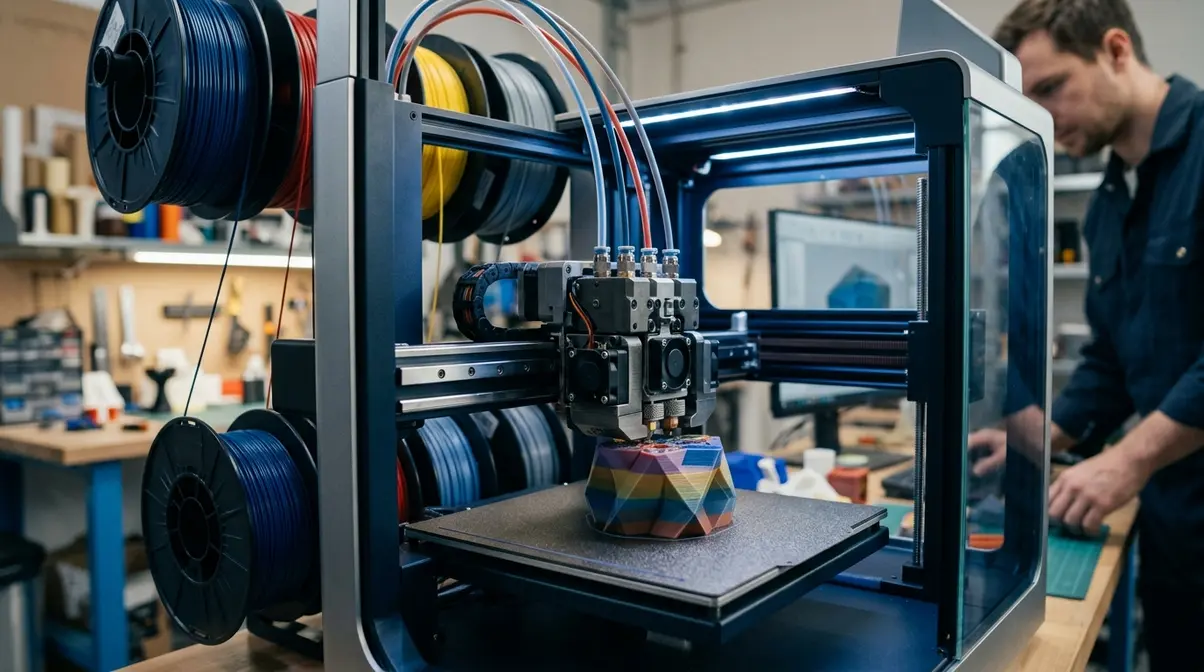
    <p>Creality has officially opened U.S. pre-orders for the K3, the latest addition to the company's K Series of 3D printers. The new machine is available for purchase starting at a price point of $849.</p><p>A core feature of the K3 is the integration of KliTek, a proprietary four-nozzle system. This technical implementation is specifically engineered to address common inefficiencies in multi-color additive manufacturing. By utilizing four nozzles, the system is designed to accelerate color-changing processes and significantly decrease the amount of filament waste typically generated by purging during complex multi-color print jobs.</p><p>The introduction of the K3 reflects ongoing efforts in the 3D printing sector to refine hardware workflows and improve material efficiency in desktop-grade systems.</p>

    Source: 3D Printing Industry
    Original article: https://3dprintingindustry.com/news/creality-opens-k3-pre-orders-at-849-with-four-nozzle-system-to-cut-multi-color-purge-waste-255796/?utm_source=rss&utm_medium=rss&utm_campaign=creality-opens-k3-pre-orders-at-849-with-four-nozzle-system-to-cut-multi-color-purge-waste

  • Researchers develop 3D-printed nitinol stents with high flexibility

    Researchers develop 3D-printed nitinol stents with high flexibility

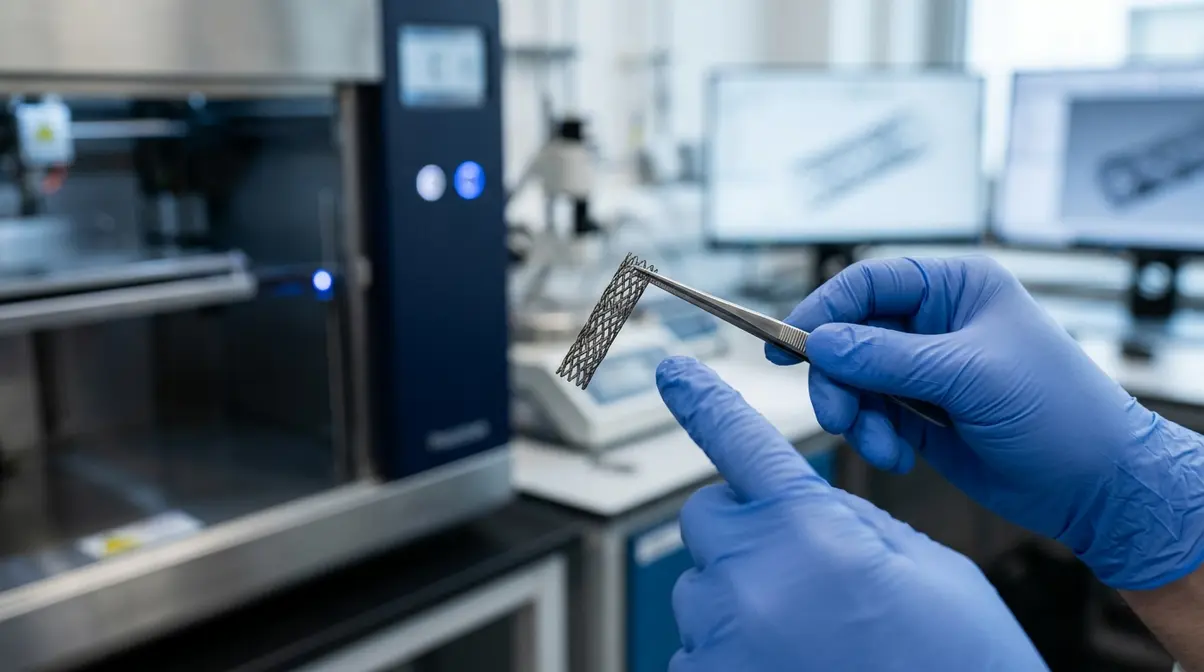
    <p>An international research team led by the IMDEA Materials Institute and the Universidad Politécnica de Madrid (UPM) has successfully developed 3D-printed vascular stents using nitinol. The new design demonstrates enhanced mechanical durability, allowing the devices to be compressed to half their original diameter while maintaining the ability to regain more than 90% of their intended shape.</p><p>These braided structures represent a significant technical development in the production of medical implants through additive manufacturing. By utilizing the unique properties of nitinol—a nickel-titanium alloy known for its superelasticity and shape-memory characteristics—researchers have created devices that can withstand the physical rigors of vascular environments without breaking.</p><p>The study highlights the potential of 3D printing to create complex, flexible medical components that require precise geometric control. As the medical field continues to integrate advanced manufacturing techniques, such developments in material resilience and structural integrity serve to improve the reliability of vascular implants. Further details on these findings were reported by the 3D Printing Industry.</p>

    Source: 3D Printing Industry
    Original article: https://3dprintingindustry.com/news/woven-in-metal-imdea-and-upm-3d-print-stents-that-bend-without-breaking-255810/?utm_source=rss&utm_medium=rss&utm_campaign=woven-in-metal-imdea-and-upm-3d-print-stents-that-bend-without-breaking

  • JOME Engineering reduces marine propeller production time using WAAM technology

    JOME Engineering reduces marine propeller production time using WAAM technology

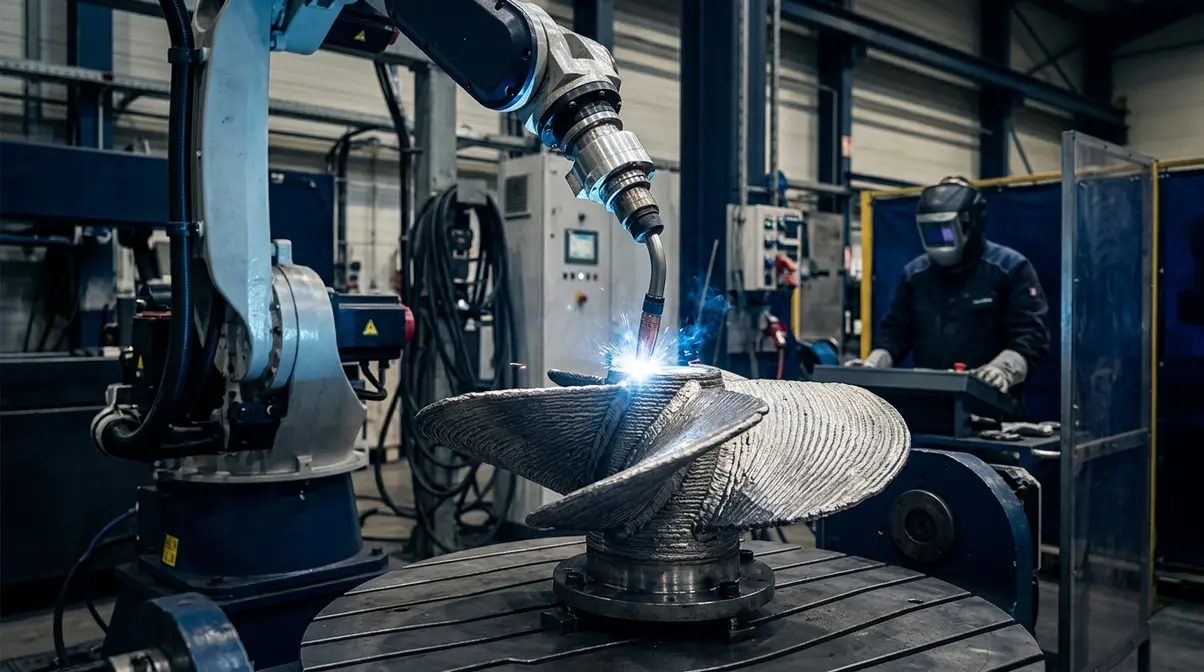
    <p>JOME Engineering has demonstrated the utility of wire arc additive manufacturing (WAAM) in the maritime sector by successfully producing a replacement marine propeller. The project, conducted in Dubai, addressed a logistical challenge where original CAD files and specialized tooling were unavailable for the component.</p><p>To overcome the lack of digital design data, the team utilized a 3D scan of the original propeller to reconstruct the geometry. This digital reconstruction enabled the additive manufacturing process, resulting in a finished 26 kg stainless steel component.</p><p>By adopting this digital manufacturing approach, JOME Engineering reported a reduction in production lead time of approximately 60% compared to conventional manufacturing methods. This development highlights the potential for 3D printing to support industrial maintenance and repair operations where original technical documentation or legacy parts are difficult to procure.</p>

    Source: 3D Printing Industry
    Original article: https://3dprintingindustry.com/news/jome-engineering-3d-prints-marine-propeller-from-a-scan-cutting-lead-time-by-about-60-255801/?utm_source=rss&utm_medium=rss&utm_campaign=jome-engineering-3d-prints-marine-propeller-from-a-scan-cutting-lead-time-by-about-60

  • Prusa Research expands access to raw polymer materials for small-scale 3D printing

    Prusa Research expands access to raw polymer materials for small-scale 3D printing

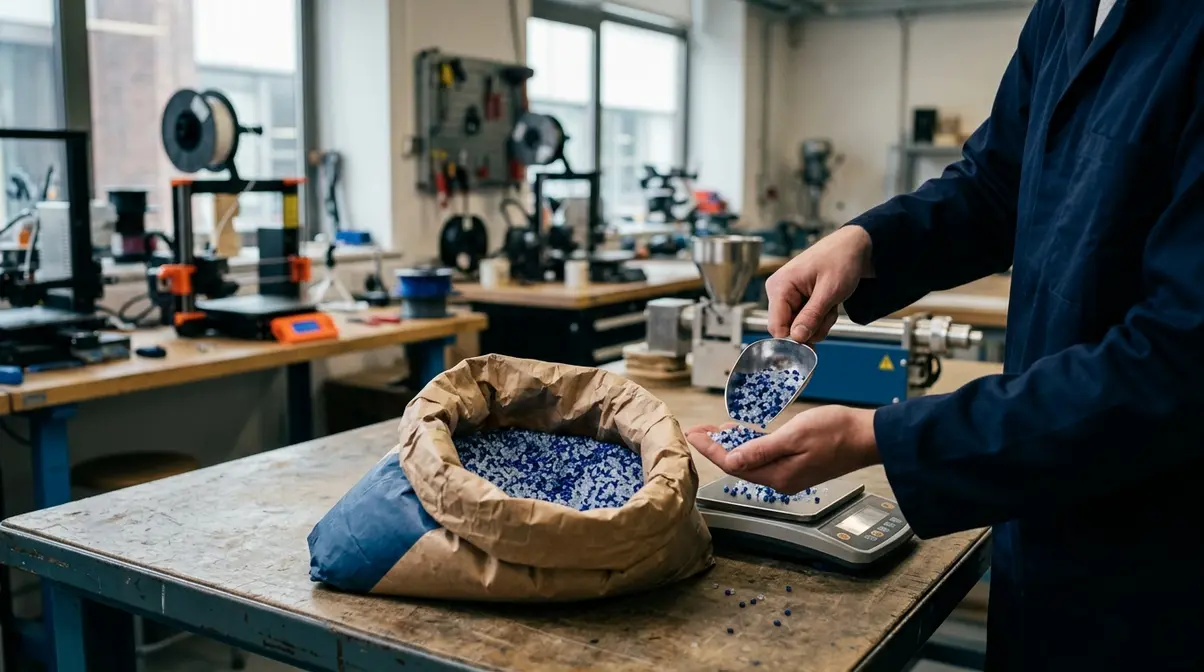
    <p>Prusa Research has expanded its material offerings by making its proprietary polymer pellets available for individual purchase. Previously associated primarily with the company's Prusament filament line, these raw materials are now being sold in smaller batch sizes ranging from 3.5 kg to 14 kg.</p><p>Announced on October 13, the initiative is designed to support users who print directly from granules or those engaged in small-scale materials research. By moving away from traditional bulk-only procurement models—which often require buying by the ton—Prusa Research is lowering the entry barrier for smaller operations and independent researchers requiring specific polymer feedstocks.</p><p>This shift reflects an increasing focus on accessibility within the additive manufacturing ecosystem, allowing users to leverage the same raw materials used in the production of Prusament filament for their own custom applications and testing environments.</p>

    Source: 3D Printing Industry
    Original article: https://3dprintingindustry.com/news/no-more-buying-by-the-ton-prusa-launches-small-batch-polymer-pellets-255814/?utm_source=rss&utm_medium=rss&utm_campaign=no-more-buying-by-the-ton-prusa-launches-small-batch-polymer-pellets

  • Guangdong Hengtai files plan for US$576 million titanium sponge facility

    Guangdong Hengtai files plan for US$576 million titanium sponge facility

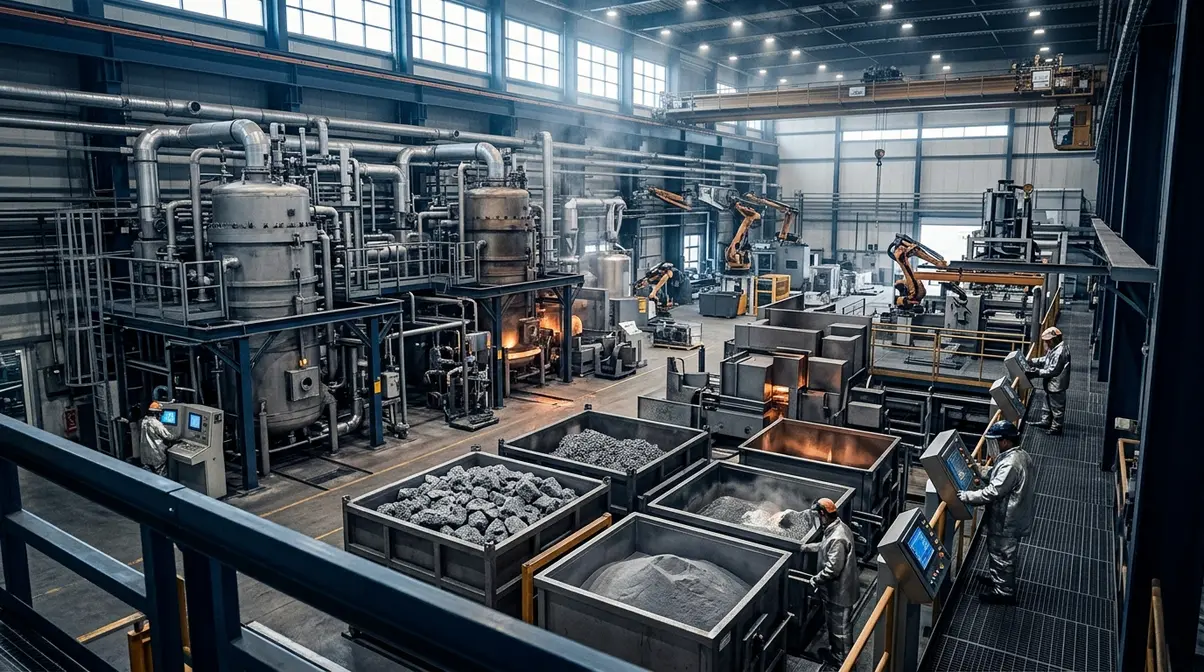
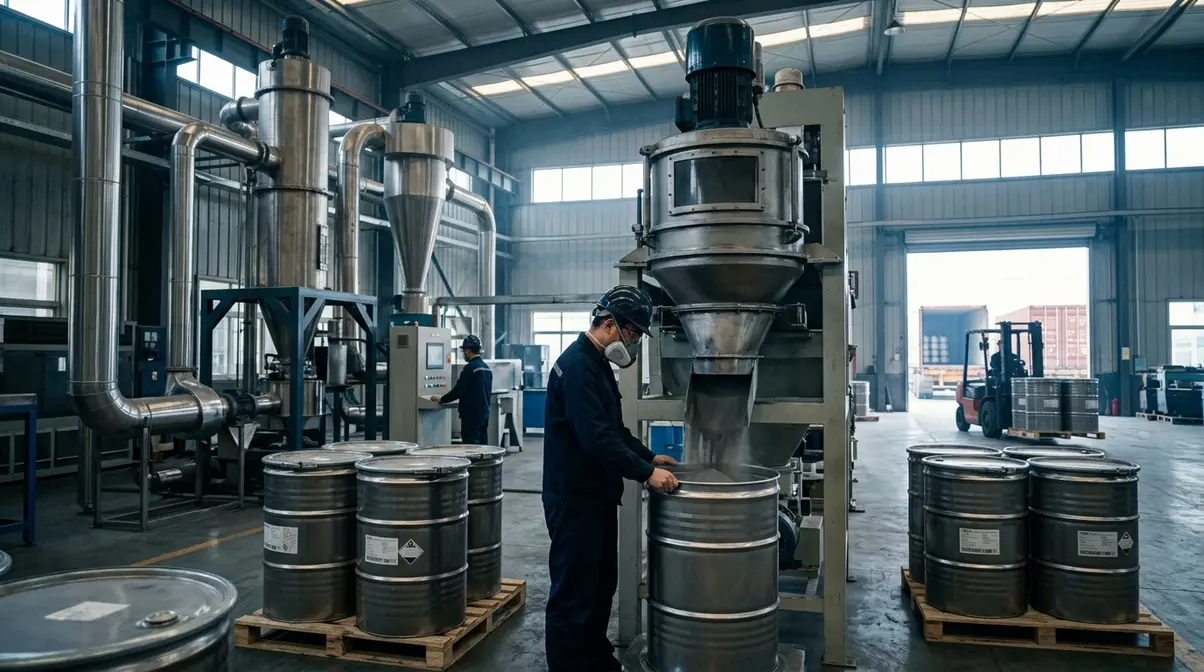
    <p>Guangdong Hengtai New Materials has officially registered the first phase of a significant industrial project in Maoming, Guangdong Province, aimed at expanding titanium material production. The company plans to invest RMB 3.837 billion, equivalent to approximately US$576 million, to develop a facility capable of producing 25,000 tonnes of titanium sponge annually.</p><p>The initiative is part of an integrated strategy to scale up the production of titanium materials, which are critical components in advanced manufacturing sectors. Titanium sponge serves as the primary raw material used to create titanium metal, a substance valued for its high strength-to-weight ratio and corrosion resistance, making it essential for aerospace, medical, and specialized industrial applications.</p><p>According to reports referencing local investment filings, the project represents a substantial commitment to increasing domestic capacity for these high-performance materials. Further details regarding the construction timeline and operational milestones for the facility have not yet been disclosed.</p>

    Source: 3D Printing Industry
    Original article: https://3dprintingindustry.com/news/chinese-firm-files-us576m-plan-for-25000-tonnes-of-titanium-sponge-capacity-255818/?utm_source=rss&utm_medium=rss&utm_campaign=chinese-firm-files-us576m-plan-for-25000-tonnes-of-titanium-sponge-capacity

  • Agility Robotics introduces Digit 5 humanoid for commercial scale

    Agility Robotics introduces Digit 5 humanoid for commercial scale

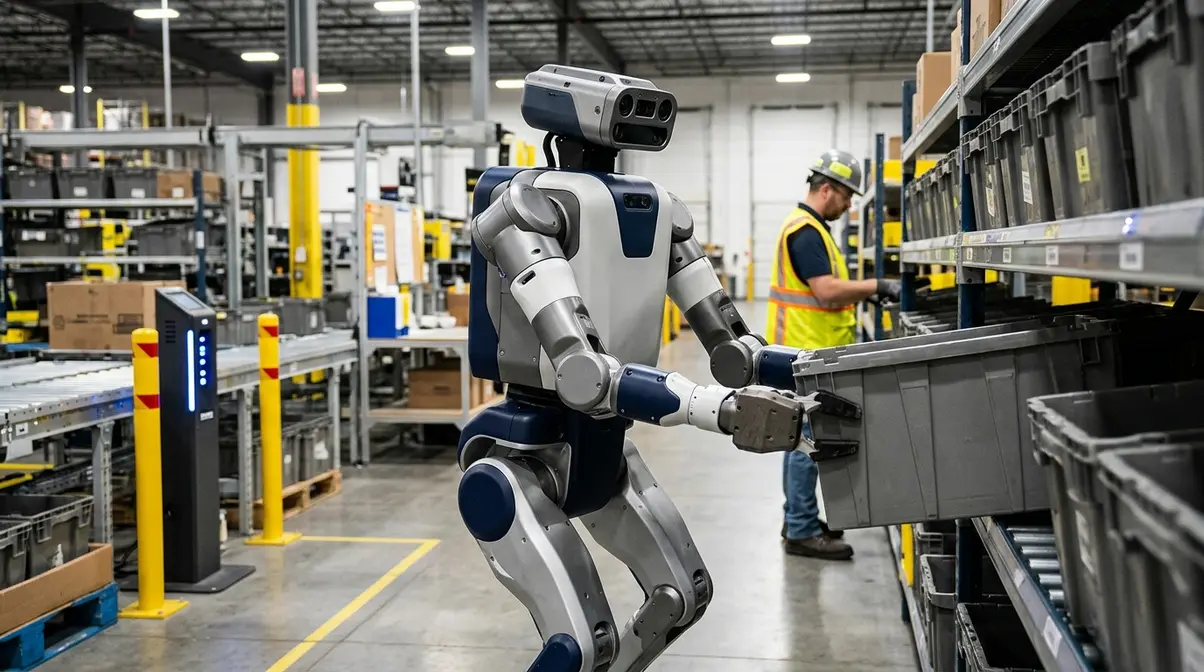
    Agility Robotics has officially launched Digit 5, the company's latest humanoid robot platform designed to perform physically demanding labor at scale within commercial settings. Developed over more than a decade of research, the robot is engineered to operate in warehouse and manufacturing environments, specifically targeting tasks like bin handling that are repetitive or physically stressful.

    Digit 5 represents a significant shift toward commercial utility for Agility Robotics. While earlier platforms like ATRIAS and Cassie focused on dynamic locomotion and research, Digit 5 is designed to meet strict commercial and regulatory standards, including European CE compliance, North American UL electrical-safety certifications, and FCC electromagnetic radiation limits. Weighing over 120 kilograms, the robot is built to lift 23-kilogram bins onto shelves up to 1.75 meters high. Its power system allows for near-continuous operation; the robot can run for 90 minutes and fully recharge in 9 minutes using a 240-ampere, 48-volt dock.

    A primary design priority for Digit 5 is safety, enabling the robot to work safely alongside human coworkers. To meet insurance and regulatory requirements without relying on physical safety cages, the robot utilizes a suite of sensors to detect nearby people. Upon detecting a human, Digit 5 is programmed to halt its tasks, set down its payload, and sit on the floor before cutting power to its motors.

    Unlike previous iterations, Digit 5 features a humanoid leg configuration. The company moved away from the earlier "ostrichlike" leg design used in its predecessors because the new geometry better supports squatting motions required for lifting heavy objects from near the floor. Although the addition of extensive sensors, cooling systems, and robust batteries has increased the robot's size and mass compared to earlier, more lithe versions, the company maintains these trade-offs are necessary to achieve a commercially viable, safe, and productive humanoid worker. Agility Robotics currently operates a 70,000-square-foot facility, RoboFab, with the capacity to produce more than 10,000 units of the new robot per year.

    Source: IEEE Spectrum
    Original article: https://spectrum.ieee.org/agility-robotics-digit-5-redesign