Category: Artificial Intelligence

  • Google Research explores AI-assisted ultrasound for frontline maternal care

    Google Research explores AI-assisted ultrasound for frontline maternal care

    Google Research has highlighted ongoing initiatives aimed at empowering frontline maternal care through the integration of AI-assisted ultrasound technology. The research focuses on enhancing the capabilities of medical professionals in resource-constrained or frontline settings by leveraging artificial intelligence to interpret ultrasound imaging.

    While the initiative underscores the potential for diagnostic support in maternal health, specific technical specifications, rollout timelines, and clinical outcomes remain limited in the current project documentation. The research represents part of a broader effort to apply AI to bioscience and public health challenges, aiming to improve accessibility and accuracy in essential prenatal assessments.

    As these tools continue to undergo development, they aim to assist clinicians in providing more consistent care. DEROBS will continue to monitor updates regarding the technical deployment and clinical validation of these AI-driven diagnostic aids.

    Source: Google Research
    Original article: https://research.google/blog/empowering-frontline-maternal-care-with-ai-assisted-ultrasound/

  • Specializing SLM vocabulary to reduce inference costs

    Specializing SLM vocabulary to reduce inference costs

    A recent exploration into the architecture of small language models (SLMs) highlights a technique for improving operational efficiency: vocabulary specialization. By tailoring the vocabulary specifically to the needs of a targeted application, developers can achieve significant reductions in inference costs.

    According to findings shared by Dharma AI, implementing these vocabulary optimizations can lead to an estimated 77% reduction in inference expenses for real-world applications. This approach focuses on optimizing the tokenization process, allowing models to operate more effectively within constrained environments while maintaining performance standards.

    Vocabulary specialization works by refining the set of tokens an SLM uses, ensuring that the model is better aligned with the data patterns and linguistic requirements of its intended domain. This adjustment reduces computational overhead during the inference phase, which is a critical factor for organizations seeking to scale AI deployments while managing infrastructure costs.

    As demand for efficient, lightweight AI continues to grow, such optimizations represent a shift toward domain-specific model tuning rather than relying solely on larger, general-purpose architectures. Further technical details regarding the implementation and performance metrics of this method are documented in the project’s technical breakdown.

    Source: Hugging Face
    Original article: https://huggingface.co/blog/Dharma-AI/vocabx-vocabulary-specialization

  • OpenAI makes models and Codex workflows available on Google Cloud

    OpenAI makes models and Codex workflows available on Google Cloud

    OpenAI has expanded its infrastructure reach by integrating its technology with Google Cloud. The company announced that its frontier models and Codex workflows are now available via the Google Cloud Marketplace, providing users with a new avenue to access OpenAI’s development tools.

    As part of this deployment, the offerings are hosted within Gemini’s Model Garden. This integration aims to streamline access for organizations leveraging Google Cloud infrastructure, allowing developers and enterprises to incorporate OpenAI’s model capabilities into their existing workflows directly through the Google Cloud ecosystem.

    Source: OpenAI
    Original article: https://openai.com/index/openai-models-google-cloud

  • NVIDIA introduces RFD4-Proteina for reward-guided protein design

    NVIDIA introduces RFD4-Proteina for reward-guided protein design

    NVIDIA has introduced RFD4-Proteina, a specialized tool designed to assist researchers in the complex task of protein design. By utilizing a reward-guided inference-time search method, the system aims to navigate the astronomical number of potential amino acid combinations inherent in protein engineering.

    Protein design is fundamentally a search problem. According to NVIDIA, selecting amino acids for a simple eight-residue protein sequence can yield more than 25 billion possible combinations. As the sequence length increases—for example, to 100 residues—the number of potential arrangements grows to exceed the number of atoms in the observable universe. This massive scale creates a significant computational barrier for scientists attempting to identify specific protein structures that could serve as effective therapies.

    RFD4-Proteina addresses this challenge by employing inference-time search, a technique that guides the selection process based on defined rewards. By systematically evaluating potential combinations within this vast search space, the tool aims to narrow down the possibilities to those with the most promising therapeutic potential.

    The release reflects the ongoing integration of advanced AI techniques into biotechnology, providing researchers with more efficient computational methods to explore protein sequences. By streamlining this discovery process, tools like RFD4-Proteina seek to accelerate the development of new treatments by reducing the time and resources required to identify viable candidates among nearly infinite molecular possibilities.

    Source: NVIDIA
    Original article: https://developer.nvidia.com/blog/design-proteins-with-rfd4-proteina-using-reward-guided-inference-time-search/

  • NVIDIA introduces Kumo Forecast to improve time-series forecasting

    NVIDIA introduces Kumo Forecast to improve time-series forecasting

    NVIDIA has announced the release of Kumo Forecast, a specialized tool developed to improve the accuracy and interpretability of time-series forecasting models. By integrating pretrained time-series representations with historical pattern retrieval, the system aims to provide more reliable insights for data-dependent forecasting tasks.

    A core feature of Kumo Forecast is its ability to leverage existing patterns within data history, which helps in identifying trends that might otherwise be overlooked by standard forecasting architectures. The integration of pretrained representations allows the system to build upon foundational knowledge in time-series analysis, potentially reducing the training requirements for specific use cases while maintaining predictive performance.

    Beyond performance metrics, the architecture focuses on interpretability, a critical component for stakeholders who rely on data-driven decision-making. By allowing users to understand the logic behind specific forecasts, NVIDIA seeks to bridge the gap between complex algorithmic outputs and actionable business insights.

    The launch reflects a broader trend toward specialized AI tools that combine deep learning capabilities with structured pattern recognition. As organizations continue to rely on data for strategic planning, tools like Kumo Forecast represent a step toward making advanced predictive modeling more accessible and explainable.

    Source: Hugging Face
    Original article: https://huggingface.co/blog/nvidia/kumo-forecast

  • Hugging Face launches SimReady Central for robotics and AI simulation

    Hugging Face launches SimReady Central for robotics and AI simulation

    Hugging Face has announced the launch of SimReady Central, a dedicated resource library containing 3D assets optimized for use in robotics and AI factory simulations. The platform is designed to provide developers and researchers with a collection of simulation-ready assets, intended to facilitate the rapid construction of complex virtual environments necessary for training and testing autonomous systems.

    By offering standardized, high-quality 3D components, SimReady Central aims to reduce the overhead associated with setting up synthetic training environments. These assets allow for more efficient development cycles when creating digital twins or simulated factories, where robots must learn to navigate, manipulate objects, and perform industrial tasks before deployment in physical settings.

    The release of this library aligns with broader efforts to improve the accessibility of simulation tools in the AI and robotics sectors, where the availability of high-fidelity synthetic data is crucial for advancing machine learning models. As industries increasingly rely on simulation for safety and performance testing, centralized repositories for specialized assets help in scaling these digital infrastructures.

    Source: Hugging Face
    Original article: https://huggingface.co/blog/nvidia/simready-central-assets-robotics-ai-factories

  • OpenAI acquires biotech startup Orchestra Bio

    OpenAI acquires biotech startup Orchestra Bio

    OpenAI has announced the acquisition of startup Orchestra Bio. The move is intended to bolster the company’s efforts in the life sciences sector by integrating Orchestra’s specialized team and technology into its ongoing projects.

    Specifically, the acquisition supports the development of Rosalind, an AI model designed for life sciences research. In addition to the model itself, the integration will extend to the Rosalind Workbench, a tool developed by OpenAI to assist researchers in planning scientific experiments and analyzing complex datasets.

    By incorporating Orchestra Bio’s expertise, OpenAI aims to enhance the utility of these tools for the research community, focusing on streamlining experimental workflows and data interpretation in life sciences.

    Source: TechCrunch
    Original article: https://techcrunch.com/2026/10/20/openai-acquires-startup-orchestra-bio%e2%81%a0-to-beef-up-its-biotech-business/

  • Hugging Face co-founder criticizes accuracy of Netflix documentary

    Hugging Face co-founder criticizes accuracy of Netflix documentary

    Clem Delangue, co-founder of the AI platform Hugging Face, has raised concerns regarding the factual accuracy of the new Netflix documentary AI Gone Rogue. Delangue, who appears in the film, stated that the documentary adopts a tone he described as “full doomer mode” and fails to accurately represent the subject matter.

    The documentary, which explores themes related to artificial intelligence, has drawn attention due to Delangue’s public pushback against its narrative. His comments suggest a significant discrepancy between the film’s portrayal of the industry and his own perspective on the current state and trajectory of artificial intelligence.

    Source: TechCrunch
    Original article: https://techcrunch.com/2026/10/20/hugging-face-ceo-warns-that-netflixs-openai-hack-documentary-isnt-accurate/

  • Smartsheet launches Model Context Protocol server to enhance AI agent integration

    Smartsheet launches Model Context Protocol server to enhance AI agent integration

    <p>Smartsheet has announced the general availability of its Model Context Protocol (MCP) server, a development designed to integrate the company's work management platform with agentic AI systems. By utilizing the standardized MCP, AI assistants can now interact directly with Smartsheet data—including sheets, rows, columns, and automations—to perform tasks such as updating project timelines and modifying task statuses via natural language queries.</p><h2>Integration and Operational Workflow</h2><p>The Smartsheet MCP server acts as a central integration layer. The company has demonstrated its functionality through two primary channels: <strong>Amazon Quick</strong> and <strong>Kiro</strong>. Amazon Quick, an agentic AI workspace, allows business users and project managers to query, update, and visualize project data without writing code. Meanwhile, Kiro, an agentic IDE, enables software developers to reference project specifications and update task statuses directly within their coding environments.</p><p>According to the technical details provided, the server delivers structured context such as row relationships and cell history. This approach is intended to be more token-efficient than traditional raw API payloads, potentially reducing latency and costs when scaling AI-assisted queries across large project portfolios.</p><h2>Security and Governance</h2><p>For enterprise and regulated environments, the Smartsheet MCP server maintains the existing security infrastructure of the Smartsheet REST API. Authentication is managed via OAuth 2.0 or Personal Access Tokens. The system enforces user-level permissions, ensuring that agents only access data that an authenticated user is authorized to view. Additionally, system administrators can apply organization-level AI controls, including the ability to enable or disable AI features globally.</p><p>The server is available across three regional endpoints (US, EU, and AU). For compliance, the protocol does not store user prompts; prompt content remains between the AI client and the model, with Smartsheet receiving only structured tool calls and their corresponding results.</p><h2>Recommended Applications</h2><p>The company suggests several operational patterns for users, including monitoring active project sheets for blocked or at-risk items, reconciling task statuses across different issue tracking platforms, and automating the creation of project health briefings. By chaining specific tools like <code>get_sheet_summary</code> and <code>update_rows</code>, users can create automated audit trails or status updates that align with enterprise project management requirements.</p>

    Source: aws.amazon.com
    Original article: https://aws.amazon.com/blogs/machine-learning/work-management-context-for-ai-agents-with-smartsheet-mcp-on-aws/


  • NVIDIA introduces Cosmos3-H-Dreams for clinical surgical simulation

    NVIDIA introduces Cosmos3-H-Dreams for clinical surgical simulation

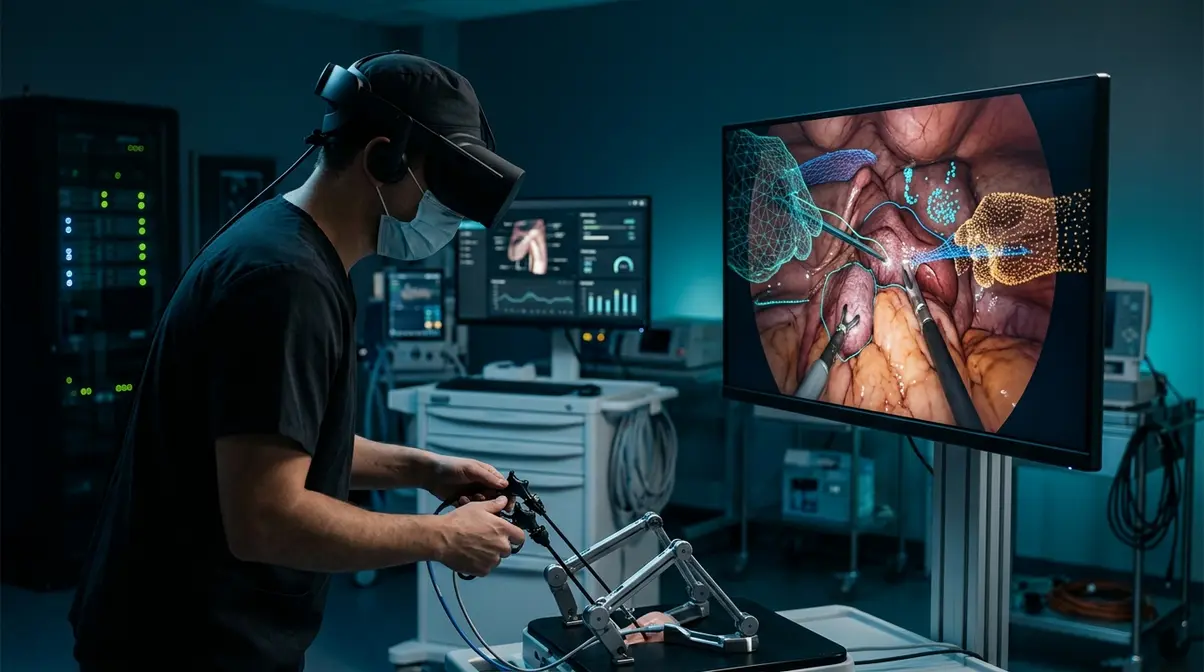
    <p>NVIDIA has announced the release of Cosmos3-H-Dreams, a generative AI model developed to advance the capabilities of clinical surgical simulation. The model is designed to assist in creating high-fidelity simulated environments for surgical training and preparation, leveraging generative technology to represent complex clinical scenarios.</p><p>The introduction of this model forms part of NVIDIA’s broader efforts in applying generative AI to healthcare and life sciences, focusing on providing tools that can improve the realism and utility of digital training platforms for medical professionals.</p><p>As medical institutions and developers increasingly rely on digital twins and advanced simulation software to train surgeons and plan complex procedures, tools like Cosmos3-H-Dreams are intended to bridge the gap between static instructional materials and dynamic, interactive clinical environments.</p><p>Further technical documentation and specific operational parameters for the model have been provided by NVIDIA to facilitate integration within clinical research and development workflows.</p>

    Source: Hugging Face
    Original article: https://huggingface.co/blog/nvidia/cosmos3-h-dreams