
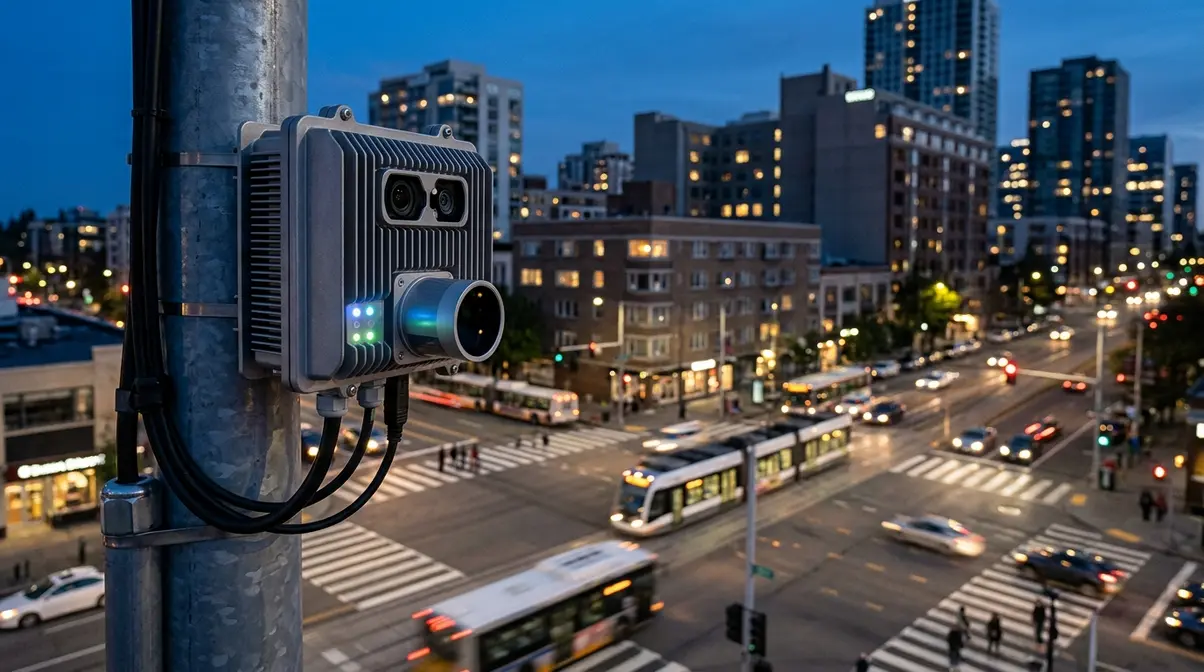
A newly released white paper examines the evolution of urban infrastructure, detailing how the integration of edge AI and physical AI can transition cities from passive monitoring to cognitive urban systems. The document outlines how infrastructure can move beyond simply gathering data to actively sensing, reasoning, and responding to real-time conditions.
The paper highlights how edge AI supports the requirements of modern urban environments by enabling low-latency decision-making. By processing data locally, these systems keep sensitive information within city boundaries and reduce reliance on centralized cloud infrastructure. This tiered edge architecture distributes tasks across far edge, regional, and cloud layers, necessitating specific requirements for hardware and software durability, security, and interoperability.
Technologically, the shift to cognitive cities relies on a combination of computer vision, multimodal sensing, and generative and agentic systems. These technologies are applied across diverse urban sectors, including public safety, mobility, and general infrastructure management. According to the publication, the ability of these systems to reason and act is what fundamentally distinguishes a cognitive city from a traditional smart city model that primarily focuses on monitoring.
Source: content.knowledgehub.wiley.com
Original article: https://content.knowledgehub.wiley.com/edge-ai-for-smart-cities-from-real-time-insights-to-cognitive-urban-systems/?utm_source=IEEE
Leave a Reply