
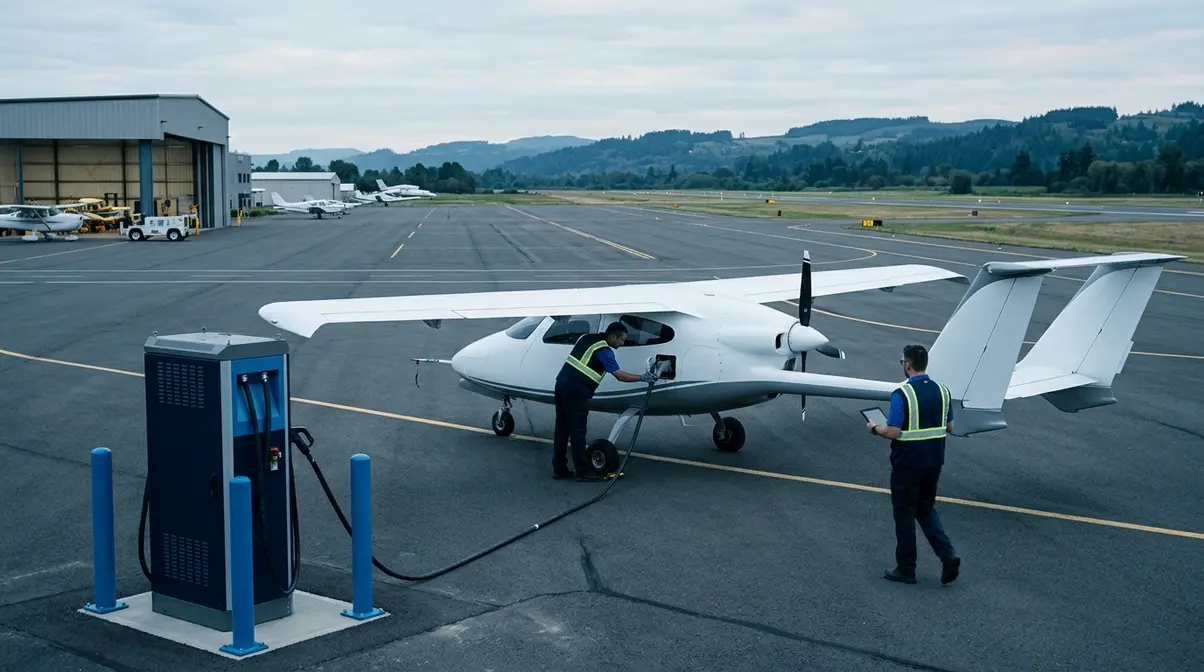
Vermont-based Beta Technologies is navigating the complex regulatory landscape of electric aviation by employing a pragmatic, staged market-entry strategy. Rather than focusing exclusively on the development of vertical takeoff and landing (eVTOL) air taxis, the company has prioritized the development and certification of its conventional, runway-based fixed-wing aircraft, the Alia CX300.
A Staged Certification Roadmap
Beta’s approach centers on shared technology between its two primary airframes: the fixed-wing CX300 and the vertical-lift A250. Both aircraft utilize identical components, including the pusher motor, battery packs, flight-control computers, and fixed-pitch propellers. By initially certifying the simpler CX300, the company aims to establish regulatory compliance for its core propulsion and control systems. Beta expects FAA certification for the CX300 in 2027, followed by the A250 one year later.
This strategy allows Beta to begin operations with medical and cargo transport missions that rely on existing public-use airport infrastructure. According to the company, this avoids the immediate complexity of integrating novel eVTOL flight paths into urban airspace, instead focusing on regional logistics where reduced energy and maintenance costs offer a clear economic advantage.
Building a Charging Ecosystem
Complementing its aircraft production, Beta is developing an open-access charging network. These charging stations utilize the Combined Charging System (CCS) standard, enabling them to serve not only Beta’s fleet but also other electric aircraft and ground-based electric vehicles. As of October, the company reported the installation of 138 fast-charge locations, with additional sites currently in various stages of construction or permitting.
Technical Reliability and Redundancy
To satisfy rigorous aviation safety standards—which mandate that catastrophic failure risks must be extremely low—Beta has engineered high levels of redundancy into its systems. This includes the H500A pusher motor, which features isolated inverters and stator sections designed to remain operational even if portions of the system experience a failure. The company’s focus on vertical integration allows its engineering team to maintain control over internal failure data and interface design, a necessity given that many specialized electric aviation components were not commercially available when the company began development in 2017.
Beta currently employs approximately 1,500 people, with operations centered in South Burlington, Vermont. The company reports a backlog of 991 aircraft and has actively participated in FAA-supervised trials, such as the transport of medical supplies between Virginia and Maryland, to demonstrate the operational viability of its technology in real-world environments.
Source: IEEE Spectrum
Original article: https://spectrum.ieee.org/beta-technologies-electric-aircraft
Leave a Reply